INTRODUCTION TO THE CONCERT HELD AS PART OF THE MUSIKFESTSPIELE SAAR
WHEN
WHERE
Historischer Braukeller | Walsheim
Brauereistraße 2
66453 Gersheim
LANGUAGE
GERMAN
PROGRAMM
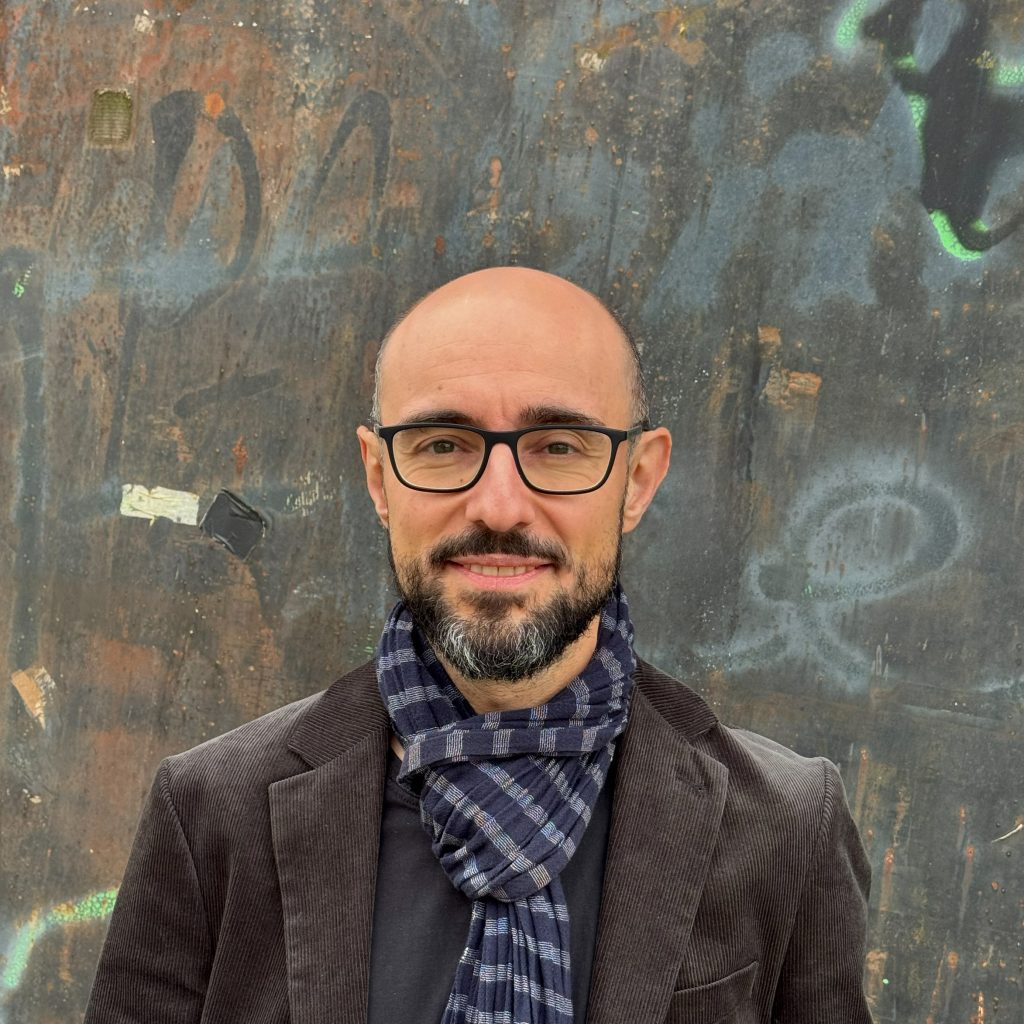
As part of the Musikfestspiele Saar, musicologist and CURE fellow Mauro Fosco Bertola will deliver an introductory talk ahead of the Naghash Ensemble concert on “Music as Reparative Practice: Notes on the Concery by the Naghash Ensemble”.
The Naghash Ensemble: Reinventing Old Armenian Sounds for the Twenty-First Century
Introductory talk by musicologist Dr habil. Mauro Fosco Bertola (Käte Hamburger Kolleg CURE): “Music as Reparative Practice: Notes on the Concery by the Naghash Ensemble”
The latest works by the American Armenian composer John Hodian combine traditional Armenian sounds with new classical music and unbridled jazz energy. Drawing on medieval Armenian poetry, three outstanding female singers and four virtuosos on duduk, oud, dhol, and grand piano create new music that sounds at once unfamiliar and familiar, earthly yet seemingly otherworldly.
In the fifteenth century, the Armenian priest Mkrtich Naghash wrote deeply moving poems about life in exile and the relationship between human beings and God. More than five centuries later, the American Armenian composer John Hodian came across a fragment of text and realised he had found what he had been searching for over so many years.
“I had heard a soprano a few years earlier singing medieval Armenian sacred music in an ancient temple,” Hodian recalls. “That warm, rich voice in the temple’s unique acoustics – it was the most beautiful thing I had ever heard. As a composer, I immediately wanted to write music that would make use of that sound in a new way. So I began looking for a text I could set to music. When I finally encountered Mkrtich Naghash, it felt as though he were speaking about the Armenian genocide of 1915 and the refugees of the twenty-first century. The texts were profoundly moving and completely timeless.”
With the voice of the soprano Hasmik Baghdasaryan in mind and Mkrtich Naghash’s texts before him, Hodian began composing his first pieces; the founding of the Naghash Ensemble soon followed. What emerged was “music that defies clear categorisation – it is hard to say whether it sounds old or new, foreign or familiar, Western or Eastern, simple or complex, minimalist or medieval” (BR Klassik).
More information is available here.
IN KOOPERATION MIT