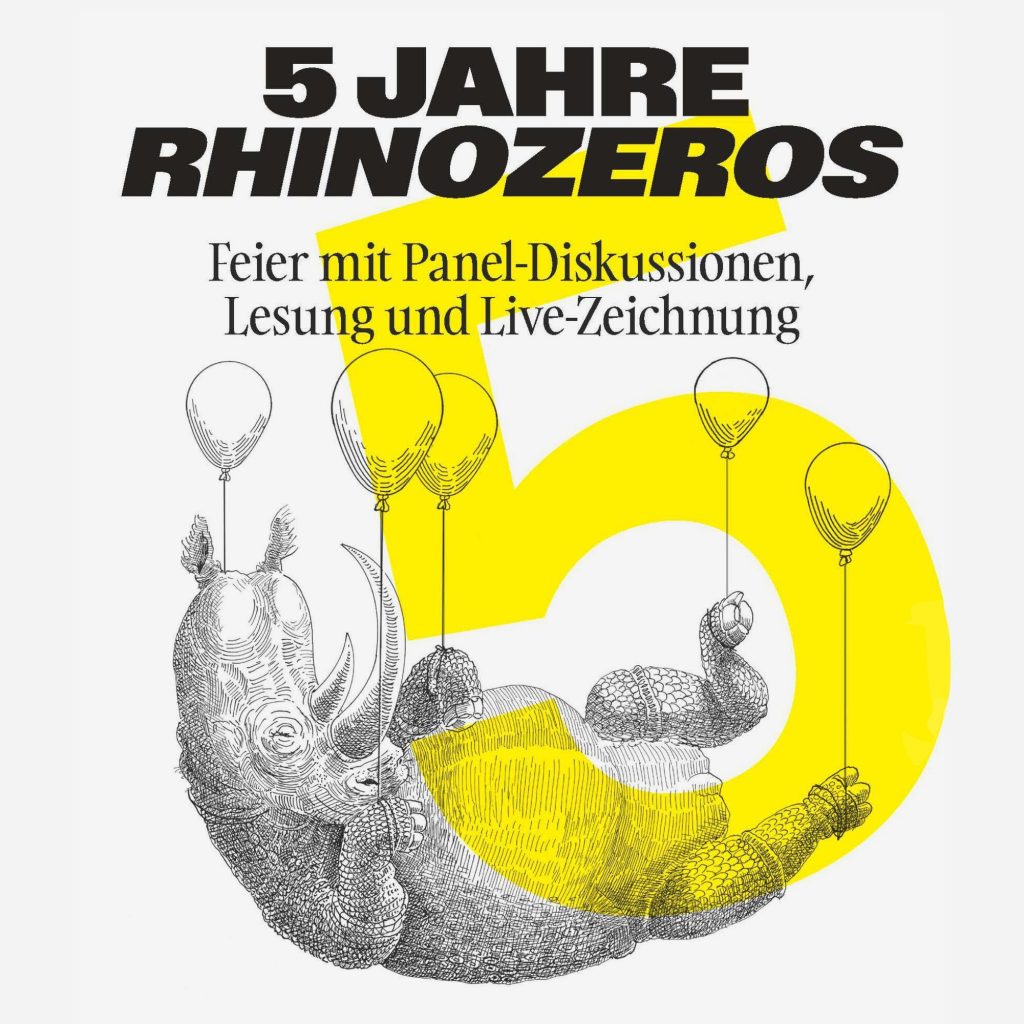
On 1 December 2025, Rhinozeros. Europa im Übergang (Rhinozeros. Europe in transition) – the cultural journal and yearbook of the Käte Hamburger Centre for Cultural Practices of Reparation (CURE) – marked its fifth anniversary with a public celebration at the Saarländisches Künstlerhaus in Saarbrücken.
Moderated by writer and board member Klaus Behringer, the event brought together the journal’s three editors – Franck Hofmann, Markus Messling, and Christiane Solte-Gresser – along with publisher Andreas Rötzer of Matthes & Seitz Berlin, managing editor Azyza Deiab, and Friederike Groß, a professor of illustration and multiple recipient of the German Award for Political Caricature. Together they reflected on the journal’s origins and guiding idea: Why was a rhinoceros chosen as the journal’s emblem? What role do cultural journals play today, especially ones that insist on print in an increasingly digital world? How are the annual themes and individual contributions chosen? And why is the latest issue on the theme of “lying and lies” so relevant to our politics today?
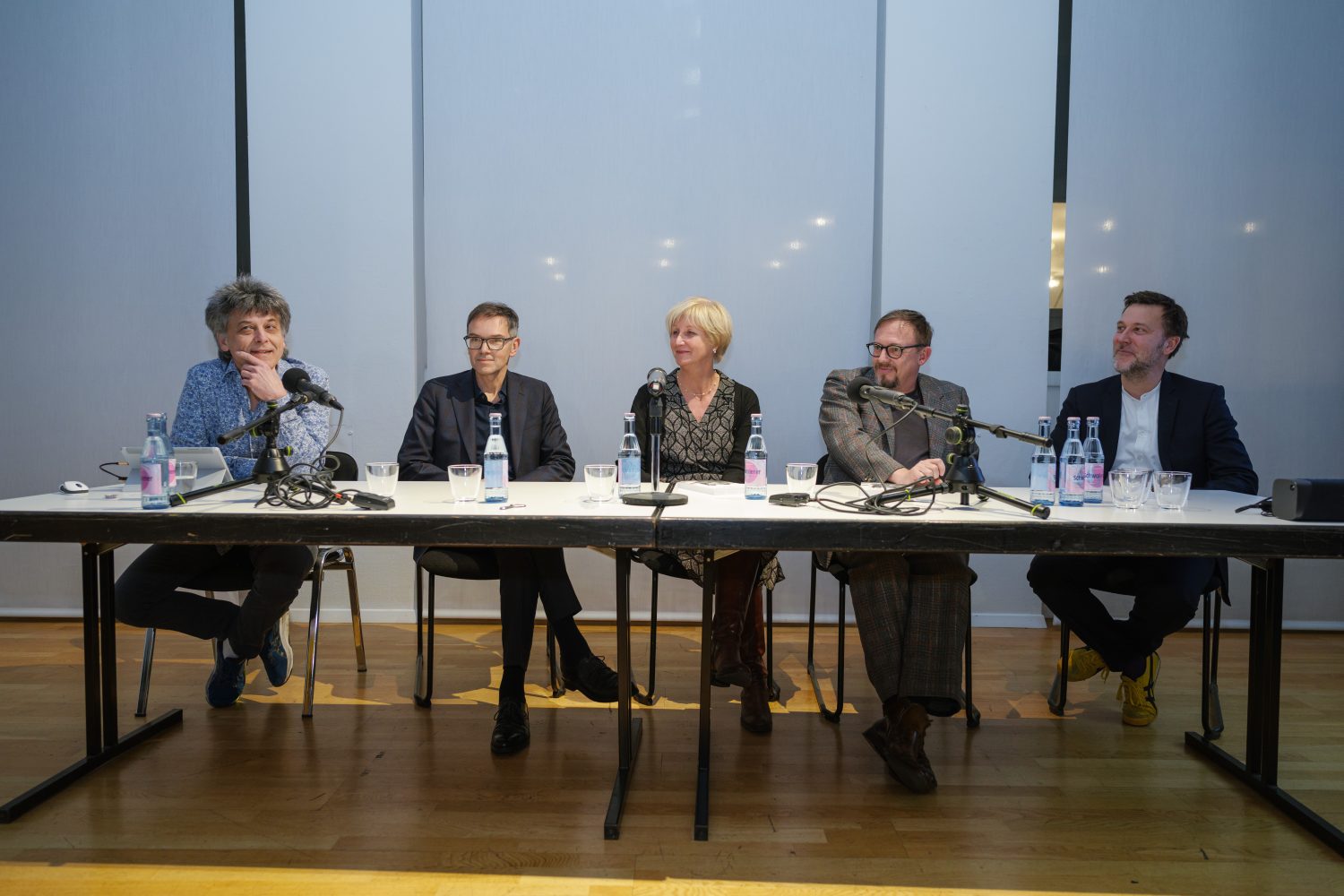
Photo: Oliver Dietze
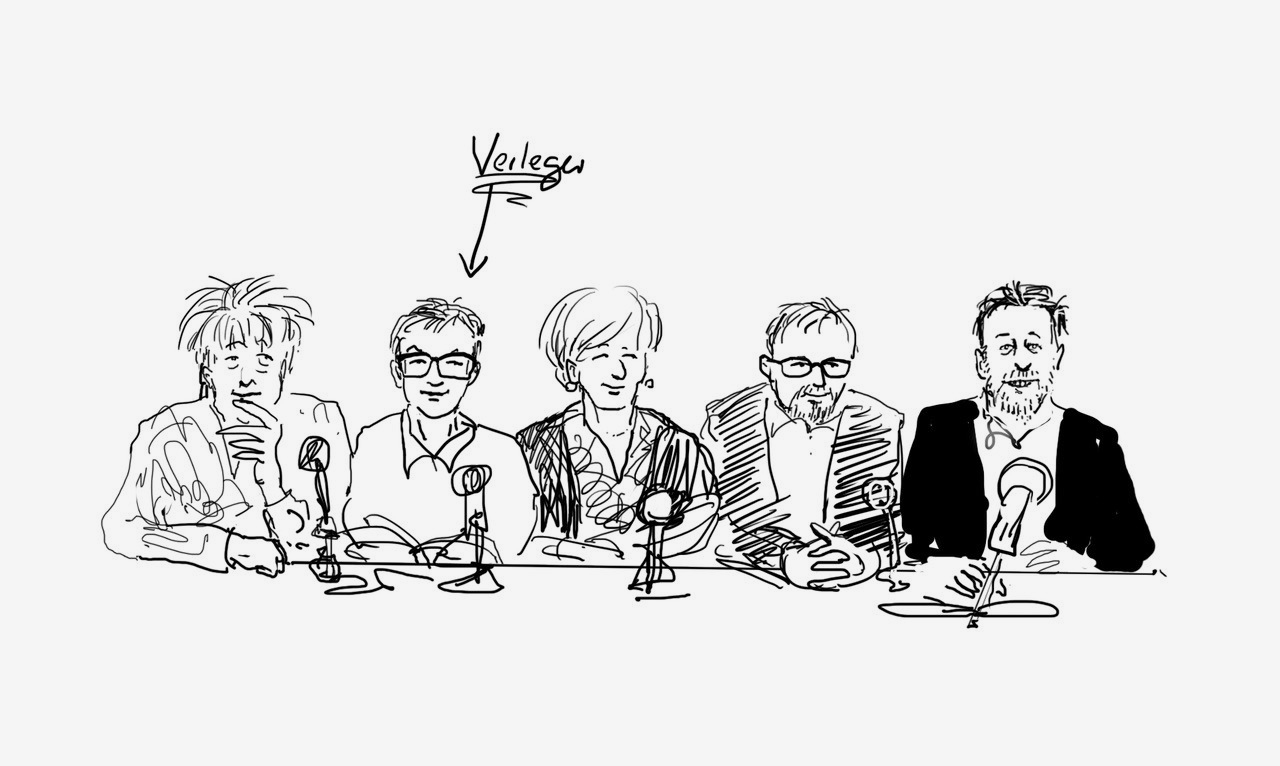
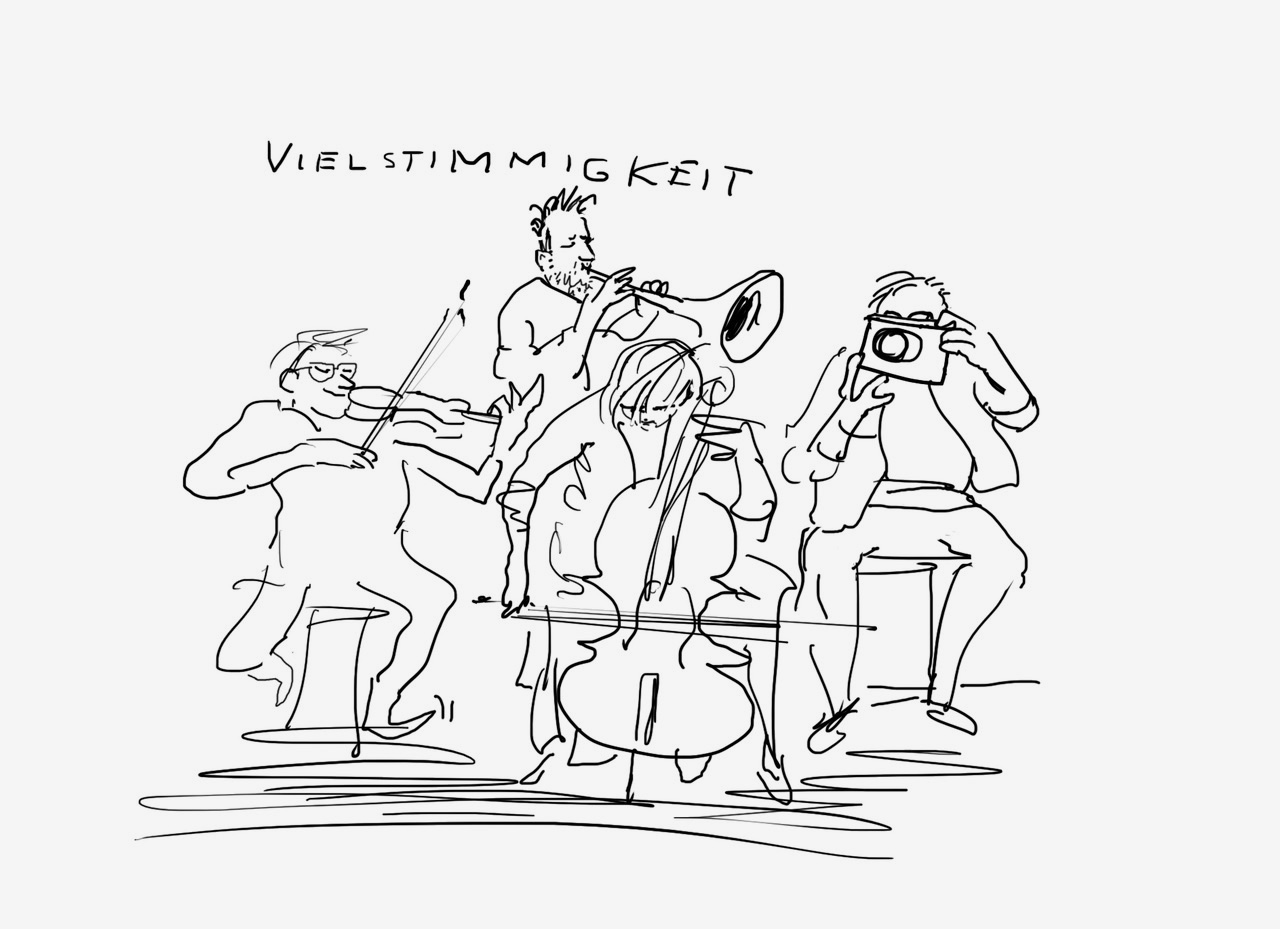
Illustration: Friederike Groß
The rhinoceros was read – with reference to Fellini’s And the Ship Sails On – as a tropical creature, a symbol of power and loss, and an emblem of a Europe in transition, caught up in rethinking and restructuring its relationships with the world. One of Rhinozeros’s founding impulses, alongside a commitment to “de-provincialising” German debates through translation, was the belief that the rise of nationalist and right-wing identitarian politics demands a response not just in politics, but also through literary and artistic reflection and sharp analysis of the times. From its beginning, Rhinozeros has stood for resistance in a double sense. With its publisher, it shares the conviction that the printed book – less easily controlled than digital media – continues to have a future as a discursive space for thoughtful, nuanced engagement with the present. At the same time, Rhinozeros seeks to foster intellectual reflection and a democratic public sphere by embracing international plurality and bringing together a wide range of textual and visual cultures. It is committed to the power of discursive thinking and theoretical depth – resources that are indispensable given the polarisation of public debate and the growing attacks on fact-based argumentation, especially in digital spaces.
The latest issue continues this mission. Following previous editions on repairing, owning, dreaming, and dwelling, this fifth edition takes up the verb to lie. Lying has always been part of politics – but today, democratic societies face the urgent task of safeguarding a shared public realm, where the search for truth and the contest over the better argument can still take place. How can the res publica be defended against the distortion of reality?
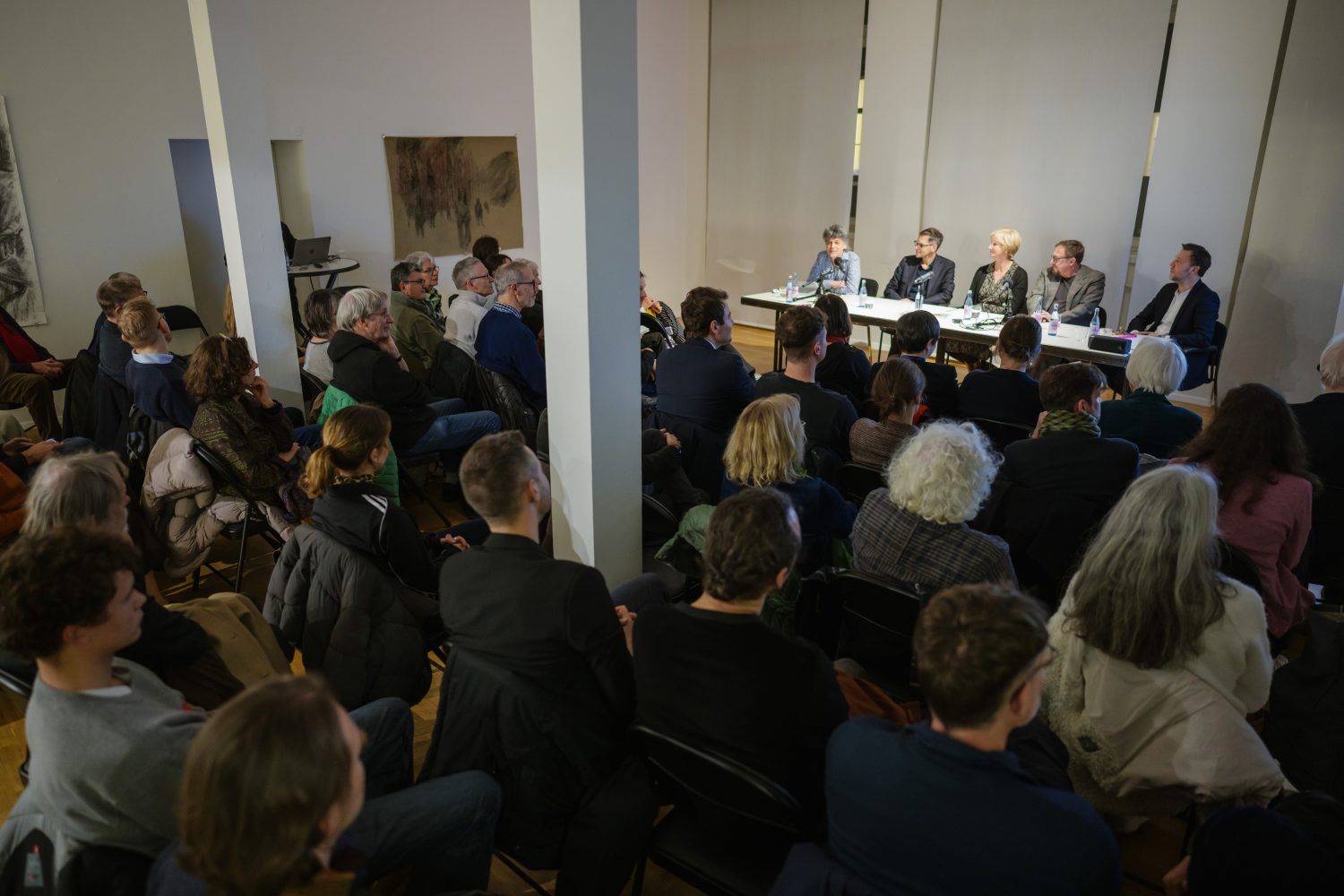
Photo: Oliver Dietze
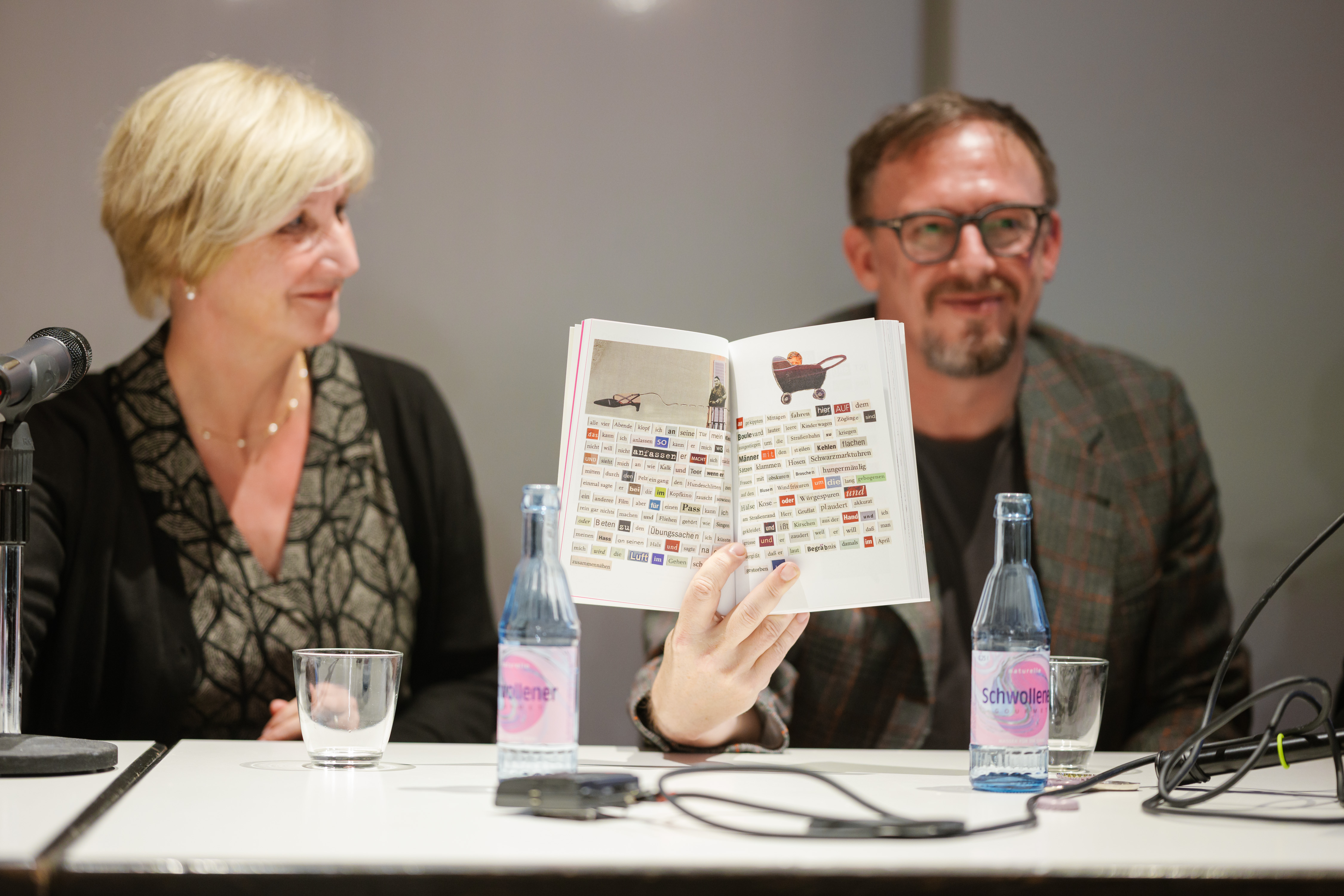
Photo: Oliver Dietze
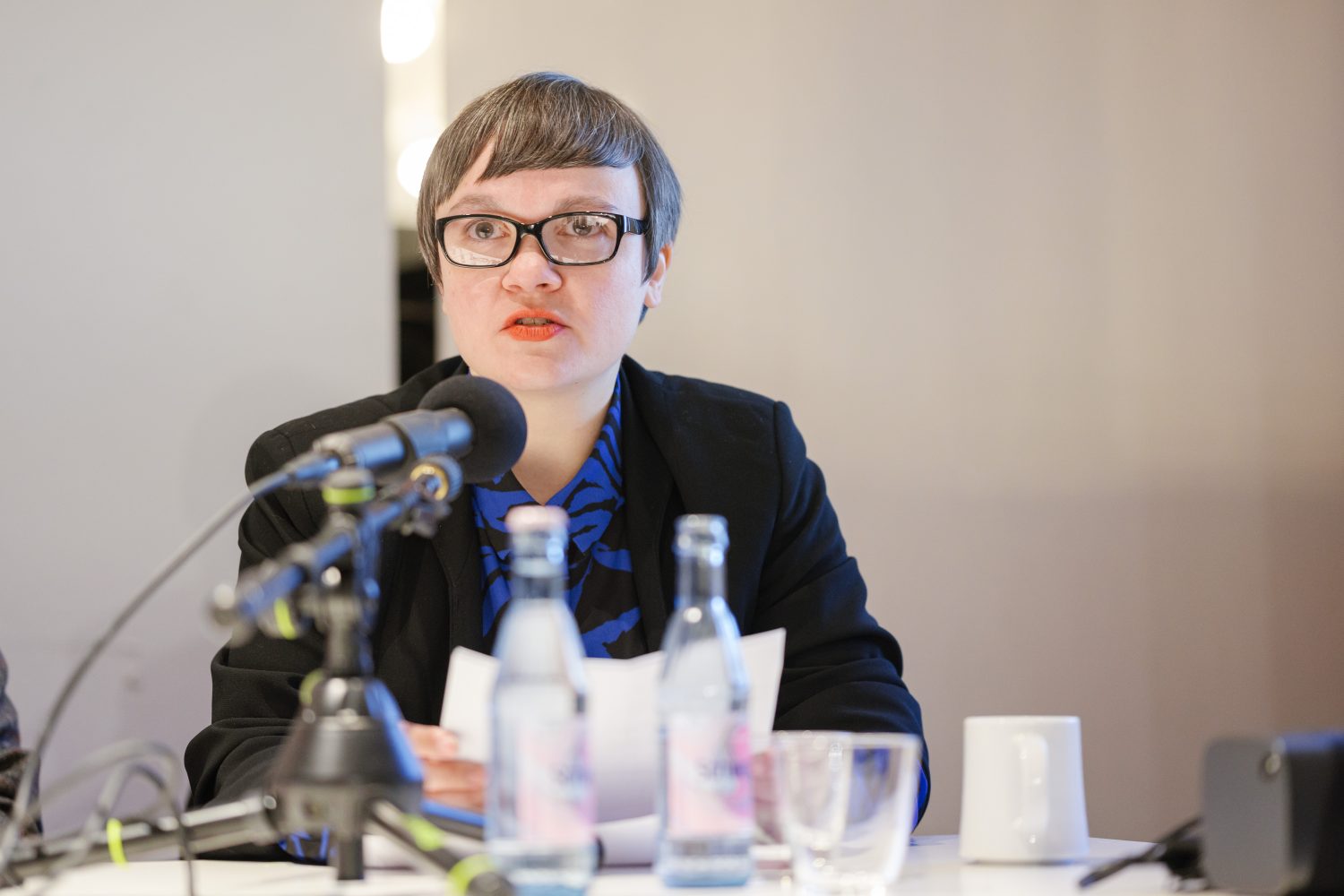
Photo: Oliver Dietze
The editors offered brief introductions to selected contributions from the issue. Alongside essays, prose, and architectural photography, voice played a role, too: audiobook narrator Nelia Dorscheid performed Herta Müller’s poems, bringing the collages in the book to life through sound. Friederike Groß, whose rhinoceros caricatures respond to each issue’s theme and bring a sharp sense of critical irony, provided live drawings of the evening’s scenes and speakers. Her question – about whether drawings can lie, and whether the struggle for truth is part of political caricature – stayed with the audience as they moved on to birthday cake and a small celebration, offering space for conversations about Europe in transition and its tropical emblem.
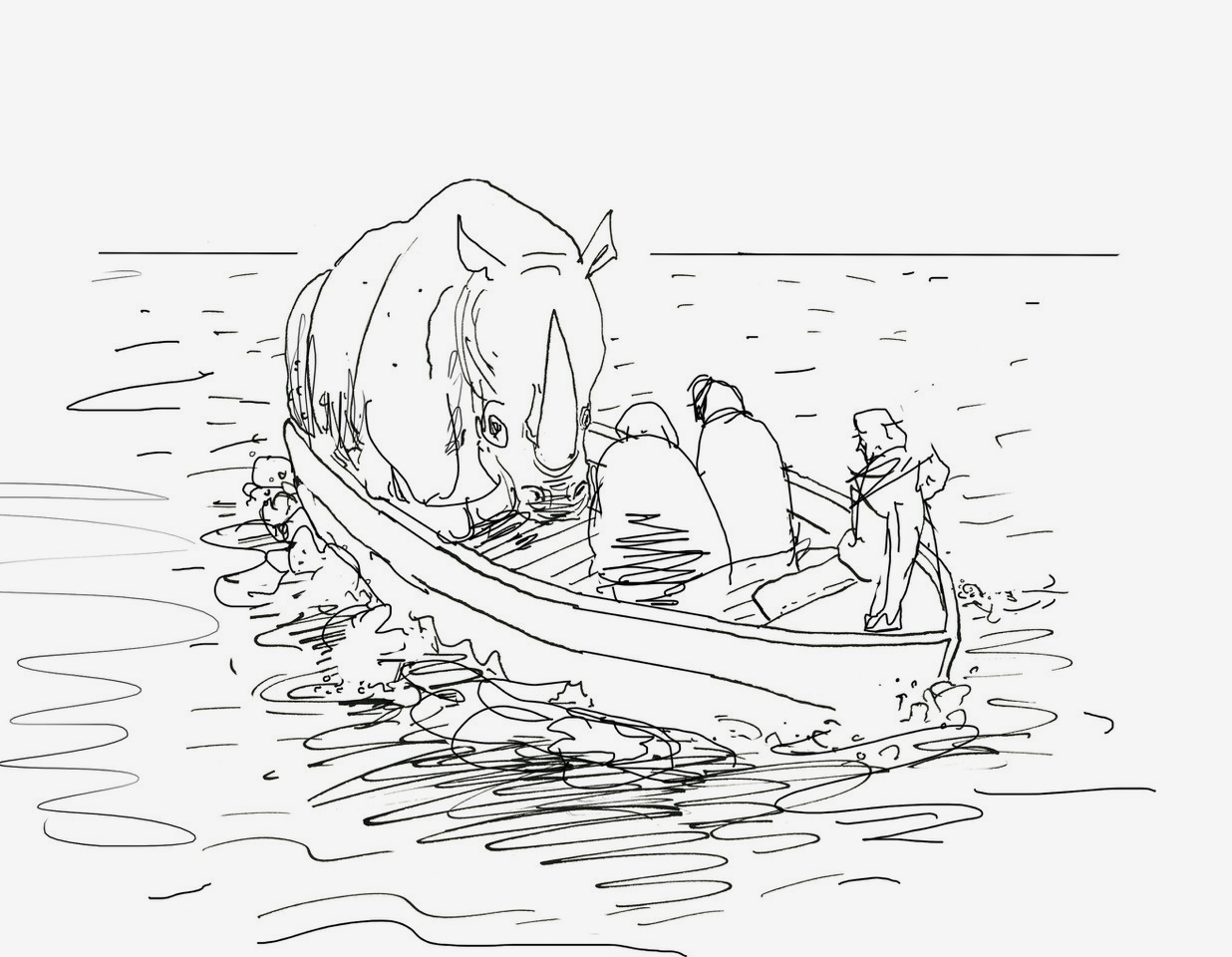
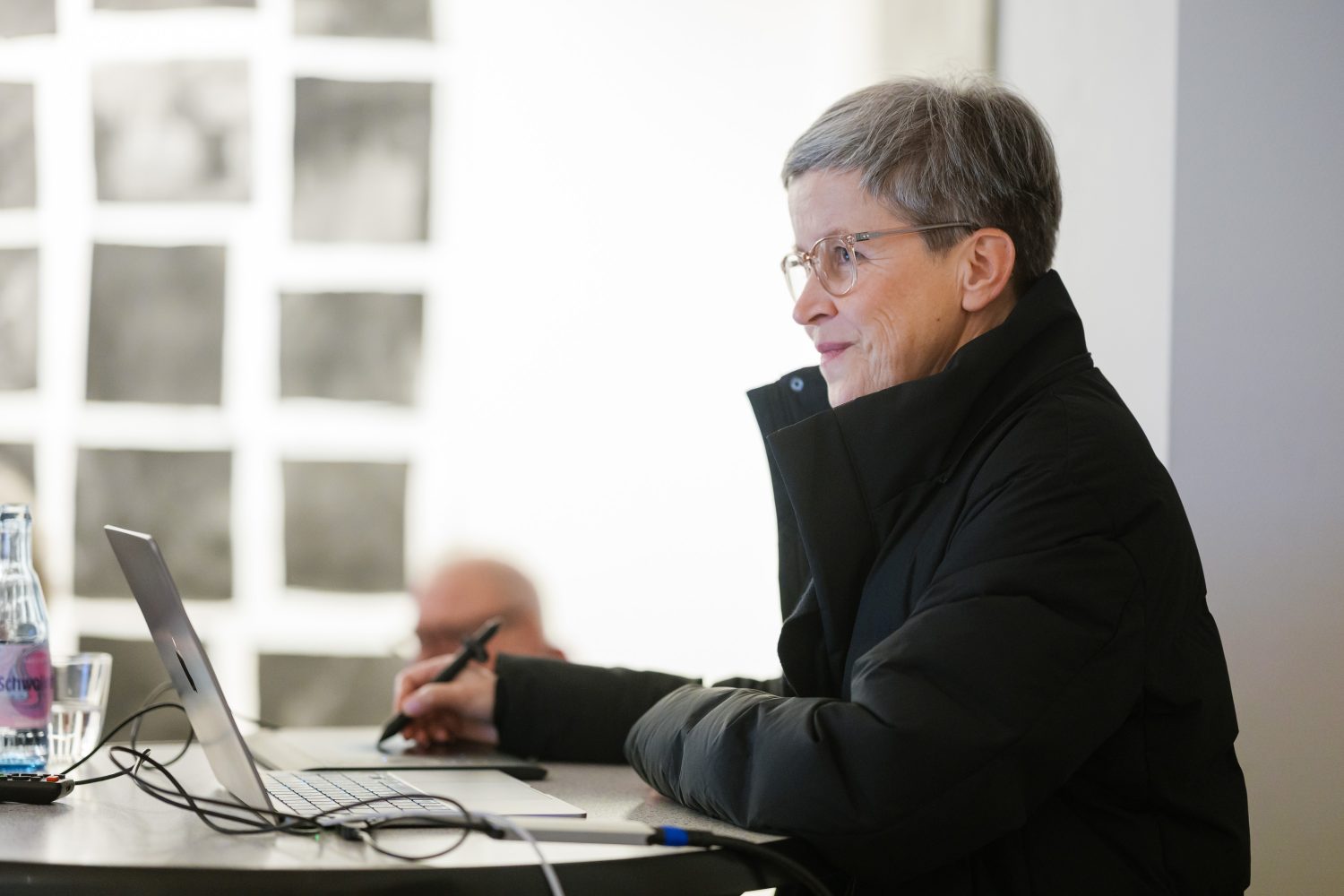
Photo: Oliver Dietze
Rhinozeros. Europa im Übergang offers a collection of texts and images that explore the present with historical insight. It aims to engage German society in worldwide, multifaceted conversations about reparations and to confront the challenge of reimagining Europe’s place in the world.
Like the centre itself, Rhinozeros is dedicated to fostering international exchange, translation, and openness to the wider world. Thematically organised around a verb – an action – each issue brings together scholarly and artistic voices from within the centre and beyond.
“Rhinozeros gives complex thought the space and time it needs. Essential in these times of political and ecological crisis.”
– Tilla Fuchs, Saarländischer Rundfunk
Its editors are Franck Hofmann, scholar in comparative literature and cultural theorist in the Department of Romance Languages and Literature at Saarland University, and a member of the Cluster for European Studies (CEUS); Markus Messling, professor of Romance literatures and comparative literary and cultural studies at Saarland University and director of the Käte Hamburger Centre for Cultural Practices of Reparation CURE; and Christiane Solte-Gresser, professor of comparative literature and director of the Käte Hamburger Centre for Cultural Practices of Reparation CURE
More information about Rhinozeros. Europa im Übergang.
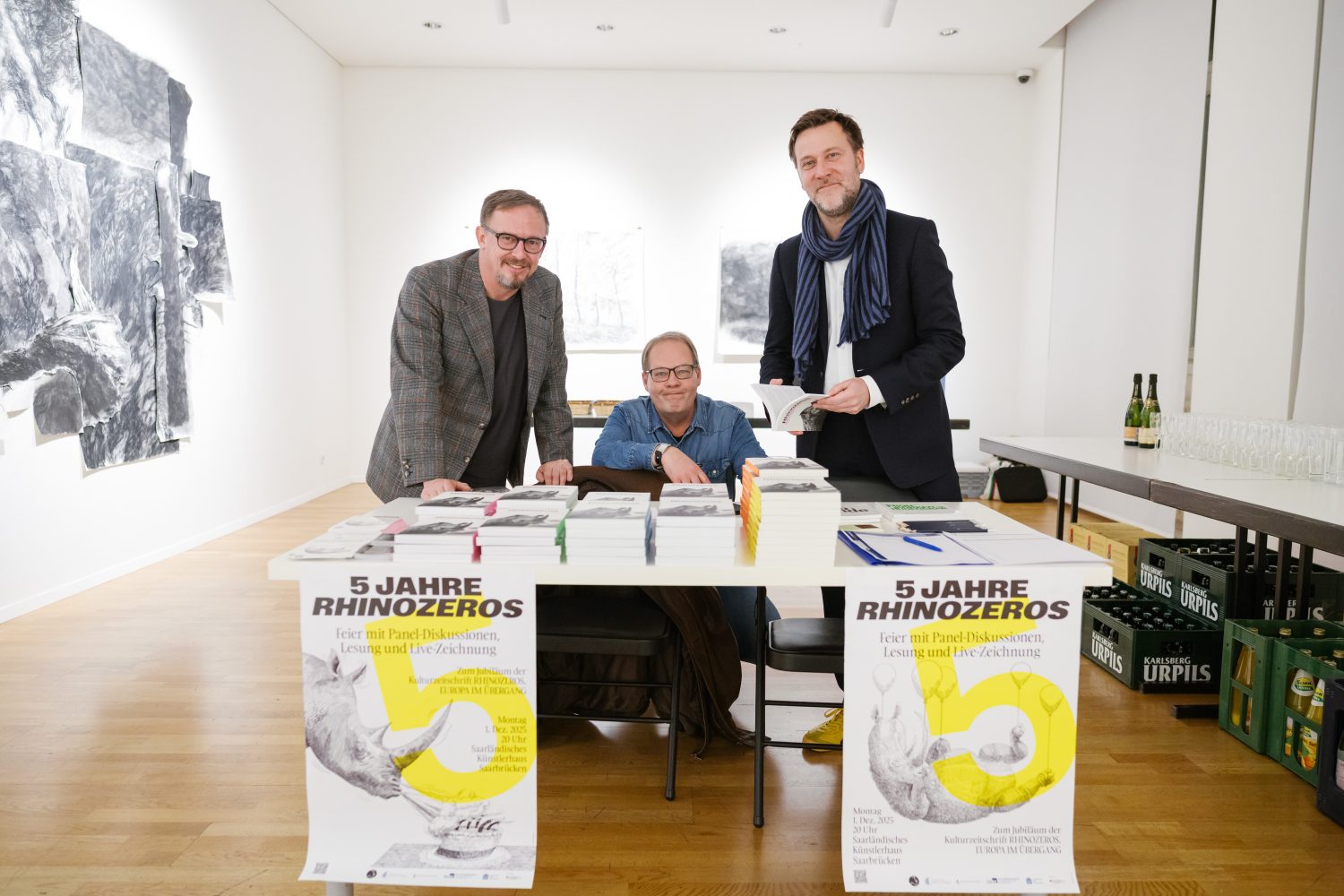
Photo: Oliver Dietze
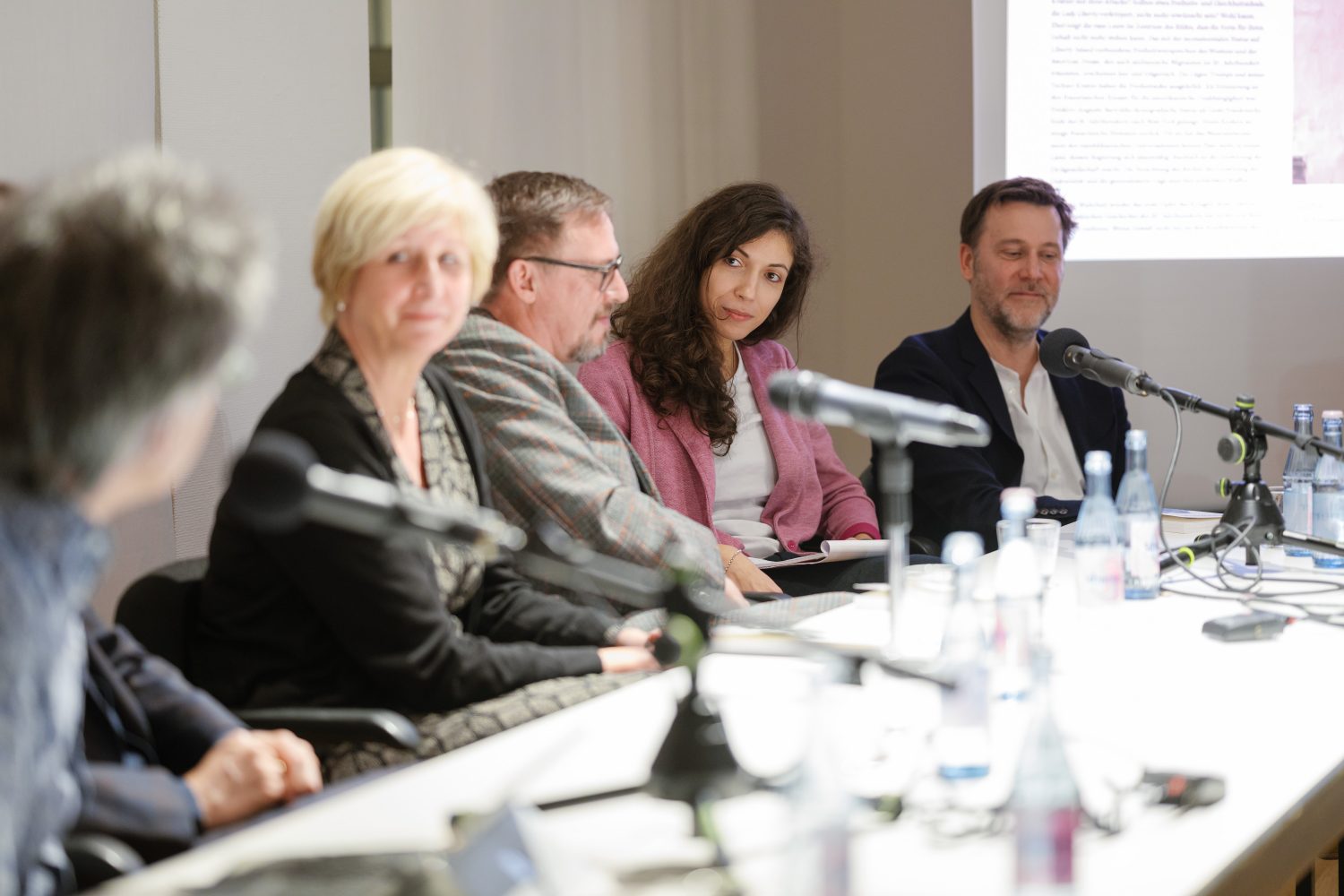
Photo: Oliver Dietze
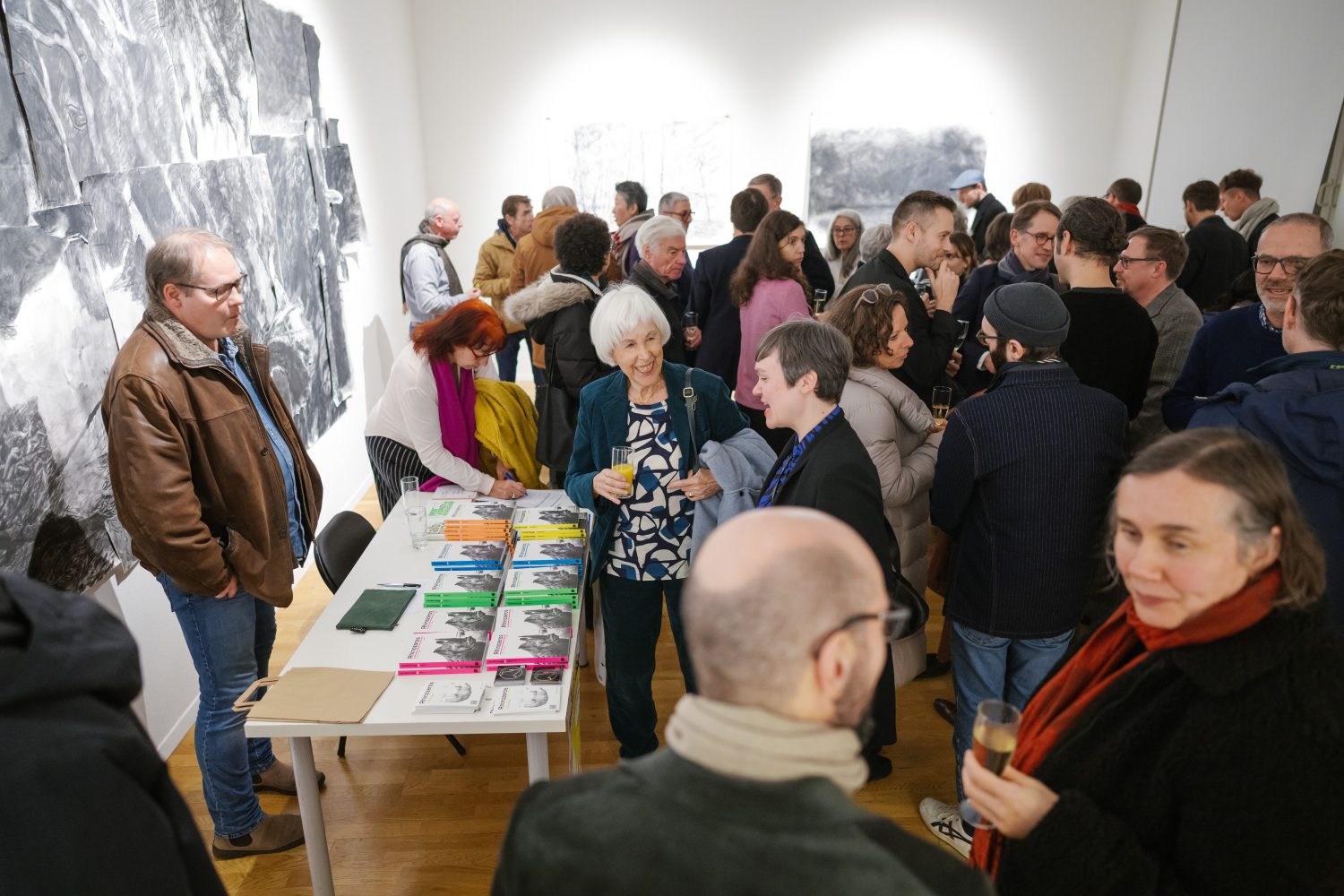
Photo: Oliver Dietze