
Times of war are times of regression. Sigmund Freud’s Thoughts for the Time of War and Death, written during World War I, could hardly be more relevant today. The culture that civilization has painstakingly built up—a thin veneer covering our primal instincts—is quickly being stripped away. Society is increasingly unable to uphold the value of symbolic forms of thought, of literature, film, visual art, or public discourse and ritual in navigating the complexities of living together. It finds itself retreating into a kind of childish stubbornness that appears to offer a sense of security. It is regressing. And the outcome of this process is polarization, hatred, and aggression.
Freud questioned the enthusiasm for war among the supposedly civilized societies of Western Europe that had spiraled into a murderous conflict in 1914. But today, this problem of regression seems to be a global issue—as a matter of wounds and woundedness. It is not only the West that is now being forced to grapple with the violence of modernity. After centuries of colonialism, this violence is affecting global society, emerging as a fundamental problem, and demanding action, in so many relationships, be they North–South or East–West. Even if the globalization of recent decades has not necessarily fostered a sense of human unity, we can only understand the world today in its entirety: there is no “outside” anymore; we’re all in the same world. This is what media coverage shows us every day. And the various wounds inflicted by this violence—from postcolonial traumas to fears of decline—are leading to a “great regression,” which tries to simplify the complexity of global interconnections by retreating into the “self,” into what is claimed as one’s “own,” and curbing the openness of democratic forms of life.1 Today, this regression is affecting not only the West, but many societies worldwide, from South America through Africa to Southeast Asia.
The fear of losing one’s self, the “authentic individuality” of one’s own culture and identity, stems from intense struggles over resources and representation that are being mercilessly fought today in the form of neoimperial endeavors and politics driven by decolonialization. Such fears can only be effectively addressed through rigorous economic policies of redistribution aimed at providing social prospects for the future. The task of culture, by contrast, is to create meaning, to offer space where wounds can be acknowledged, to initiate processes of recognition while also spurring liberation from regressive impulses. Culture involves the experience of complexity, contradictions, and ambiguity. It demands that we acknowledge wounds and their irreparability. Retreating into regression, by contrast, fosters the illusion that we could reclaim an old world—that we could place ourselves at the center unchallenged and restore a supposedly idyllic state of self-contentment. But this is something that cannot exist, and has never existed in this form, within the complexity of relationships that exist to the world, as psychiatrist and philosopher Cynthia Fleury explains in Here Lies Bitterness: Healing from Resentment. “In fact,” she writes, speaking of the patients with whom she works, “what they aim for in this fantasy of a return to the past is a state of carefreeness, the illusion of happiness, indeed happiness itself—and this remains possible. But the happiness in question will never be the old happiness. It will be something that never existed, and it is quite impressive when the patient is able to tackle this challenge.” 2
A retreat into isolation and an emphasis on identity, which often erupt in fascist fantasies of power, cannot alleviate these fears. Instead, these impulses fuel fear with resentments by continually translating what cannot be attained into a rejection of the Other and the world: if we cannot possess a “self,” then we must attack and belittle everything else to feel and elevate this self we would claim. Such dynamics can also be observed in many places in the history of the complex relationships between Europe and Africa, and they continue to fundamentally shape these relations to this day. As Fleury writes: “The will to compare betrays the emptiness that moves us, the fear of being nothing, so we search and we compare to ensure that we are better or, inversely—to point to a form of alienation that is different but no less damaging—that we are inferior: this is what becomes unbearable, so much so that it is necessary to sully our values and denigrate the other in order to invalidate this comparison that has given us such a poor image of ourselves.” 3
To break free from this cycle, one must propose processes of meaning-making that address irreparability by transforming fears into something productive—something oriented toward the future, remaining to be created. In response to the “dehumanization” of people under colonialism and apartheid, as described by Frantz Fanon,4 the Senegalese philosopher Souleymane Bachir Diagne invokes the concept of ubuntu—at once a political idea and a concrete practice focused on “shaping humanity together (Fr.: faire humanité ensemble).” 5 The shift from wounds to a process of worldbuilding is essential but challenging to achieve: “Our entire history, the entire historical path of our civilization, is constructed upon [resentment]. It is thus by no means easy to abandon this classic motor of history and implement something different: a justice that conceives of itself through action, engagement, invention, sublimation, and not reparations.” 6 Yet this is precisely where cultural practices can have an impact: by providing the complexity necessary to explore the tension between the irreparability of life destroyed, and the necessity of carrying on, to make this tension available to experience and transform it into something new. As the author W. G. Sebald notes—and one could extend this point to artistic and aesthetic practices in general: “There are many forms of writing; only in literature, however, can there be an attempt at restitution over and above the mere recital of facts, and over and above scholarship.” 7 By restitution, though, Sebald does not mean compensation. He is more concerned with a fragmented recovery of irretrievable historical experience—by means of intricate processes of witnessing and remembering that are indispensable for envisioning a future. Many of the works exhibited in THE TRUE SIZE OF AFRICA vividly illustrate this by creatively working through both individual and collective traumas, shifting focus toward what comes after the wounds: toward the forms and possibilities of survival, of living on, and of living a good, just life.
Markus Messling & Christiane Solte-Gresser
The full article is published in the exhibition catalogue THE TRUE SIZE OF AFRICA (2025) edited by Ralf Beil, Markus Messling, and Christiane Solte-Gresser and published by Hirmer/Chicago University Press.
Cover Image: © Zanele Muholi, courtesy of Southern Guild
1. Arjun Appadurai, “Democracy Fatigue,” in The Great Regression, ed. Heinrich Geiselberger (Cambridge: Polity Press, 2017), 1–12. Unless otherwise noted, all translations of sources by Michael Thomas Taylor.
2. Cynthia Fleury, Here Lies Bitterness: Healing from Resentment, trans. Cory Stockwell (Cambridge: Polity Press, 2023), 41.
3. Fleury, Here Lies Bitterness, 38–39.
4. Originally published in 1961 and translated most recently by Richard Philcox as Frantz Fanon, The Wretched of the Earth, with a foreword by Homi K. Bhabha and a preface by Jean-Paul Sartre (New York: Grove Press 2004).
5. Souleymane Bachir Diagne, “Ubuntu als Antwort auf den Konflikt der Kulturen,” in Rhinozeros: Europa im Übergang, vol. 1, “reparieren,” ed. Markus Messling et al. (Berlin: Matthes & Seitz, 2021), 93–105, on 93.
6. Fleury, Here Lies Bitterness, 39.
7. W. G. Sebald, “An Attempt at Restitution,” New Yorker, 20 and 27 December 2004, https://www.newyorker.com/magazine/2004/12/20/an-attempt-at-restitution, accessed 12 September 2024.
Markus Messling and Christiane Solte-Gresser. “The Art of Reparation: On Crises, Resentment, and the Power of Creativity” . In THE TRUE SIZE OF AFRICA, exhibition catalogue edited by Ralf Beil, Markus Messling, and Christiane Solte-Gresser. Hirmer/Chicago University Press, 2025, 484–498.
Markus Messling and Christiane Solte-Gresser. “The Art of Repair: On Crises, Resentment, and the Power of Creativity (Excerpt)”. The Reparation Blog, 16 January 2026. https://cure.uni-saarland.de/en/media-library/blog/the-art-of-repair-on-crises-resentment-and-the-power-of-creativity-excerpt/.
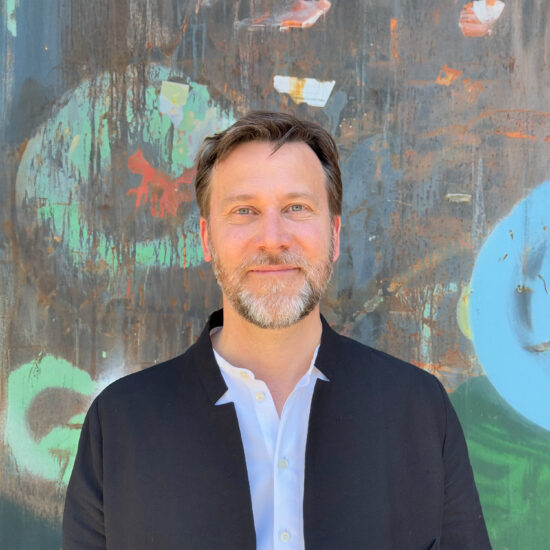
Prof. Dr. Markus Messling
Markus Messling is professor of Romance literatures and comparative literary and cultural studies at Saarland University. Previously, he was deputy director of Centre Marc Bloch, the Franco-German research centre for social sciences and humanities, and professor of Romance literatures at Humboldt University of Berlin. From 2009 to 2014 he directed the junior research group “Philology and Racism in the 19th Century” at the University of Potsdam (Emmy Noether excellence grant funded by the German Research Foundation). He has been principal investigator of the ERC consolidator grant “Minor Universality: Narrative World Productions After Western Universalism” (2019-2024). He is an ordinary member of Academia Europaea and has held visiting professorships and fellowships at EHESS Paris, the University of Cambridge, the School of Advanced Study/University of London, and Kobe University in Japan. Since April 2024, together with Christiane Solte-Gresser, he has been director of the Käte Hamburger Centre for Cultural Practices of Reparation (CURE) funded by the German Federal Ministry of Education and Research (BMBF).
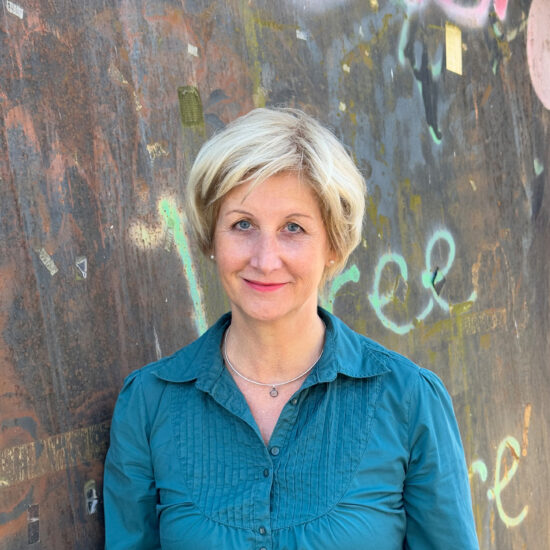
Prof. Dr. Christiane Solte-Gresser
Christiane Solte-Gresser has been a full professor for general and comparative literature at Saarland University since 2009, where she also served as the spokeswoman of the research training group “Europäische Traumkulturen” (“European Dream Cultures”, GRK 2021, running from 2014 to 2024), funded by the German Research Foundation. She has held visiting and acting professorships at the Aix-Marseille University and the Goethe University Frankfurt. Since 2023, she has been chair of the German Society for General and Comparative Literature (DGAVL). She is also a member of the board of directors of LOGOS, the international graduate school of the University of the Greater Region. Furthermore, she is the editor of several book series and journals, including Jahrbuch Komparatistik, Rhinozeros. Europa im Übergang, Traum – Wissen – Erzählen, and Saarbrücker Beiträge zur Vergleichenden Literatur-und Kulturwissenschaft. Since April 2024, together with Markus Messling, she has been one of two directors of the Käte Hamburger Centre for Cultural Practices of Reparation (CURE) funded by the German Federal Ministry of Education and Research (BMBF).