
The years following 2019 raise the question of what poetry written in English, by and for Hongkongers, can do in the aftermath of collective trauma. The pro-democracy protests of that year were the culmination of a decade of mounting tension. They were triggered in March 2019 by a proposed extradition bill that would have allowed suspects to be transferred to mainland Chinese jurisdiction, but they rapidly expanded into something larger: a sustained, citywide uprising against the erosion of the autonomy Hong Kong had been promised under the “one country, two systems” framework that governed its handover from Britain to China in 1997. At their peak in June 2019, an estimated two million people—more than a quarter of the city’s population—took to the streets. The movement produced its own iconography, its own songs, its own internal debates about tactics and limits, and a brief, vertiginous sense that the city’s political imagination was boundless.
The response of the government was the imposition of the National Security Law on 30 June 2020, drafted in Beijing and published in Hong Kong without prior consultation of the territory’s own legislature. The law criminalised four new offences—secession, subversion, terrorism, and collusion with foreign forces—each broadly defined and carrying sentences of up to life imprisonment. The deliberate vagueness of these categories was itself a mechanism of control: the boundaries of the permissible were left unclear, ensuring that self-censorship would do much of the law’s work. Article 38 extended the law’s jurisdiction extraterritorially, applying it to offences committed anywhere in the world by anyone, including non-residents of Hong Kong. Civil society was dismantled with the speed that only authoritarian measures can achieve: trade unions dissolved themselves, pro-democracy newspapers closed or were forced to close, textbooks were revised, commemorative gatherings prohibited, and an atmosphere of enforced amnesia settled over public institutions. Writers found themselves navigating a new and dangerous silence. It is in this context that the Anglophone poetry produced in and around that time invites reading as a form of reparation: not reparation in any triumphant or restorative sense, but in the more searching sense proposed by the Käte Hamburger Centre CURE’s research programme, as the attempt to shape a liveable future in full awareness that the damage cannot be undone.
The two anthologies at the centre of this inquiry are People, Pandemic & Protest: The KongPoWriMo 2020 Anthology (edited by Rachel Ka Ying Leung and Silvia Suk Yi Tse, 2020) and Where Else: An International Hong Kong Poetry Anthology (edited by Jennifer Wong, Jason Eng Hun Lee, and Tim Tim Cheng, 2023). Both were published by Verve Poetry Press in Birmingham, England.1 The offshoring of these publications places Hong Kong’s literary record beyond the reach of domestic censorship and transforms the anthologies into what can be understood, following Pierre Nora’s concept of lieux de mémoire,2 as diasporic sites where collective memory crystallises and persists when living transmission is disrupted or overwritten. The poetry in both volumes addresses three interrelated concerns: resistance, cultural memory, and emotional repair. They are simultaneous, often indistinguishable, and together they constitute the reparative dimension of Hong Kong Anglophone poetry as it is examined here.
In a city where direct political speech has become hazardous, poetry offers obliquity. Tegan Smyth’s “Masks Don’t Burn”, an erasure poem in People, Pandemic & Protest, redacts the government’s anti-mask law until only spectral fragments remain, so that the silences on the page mime the silences imposed on the street. Lian-Hee Wee’s “9779”, in the same anthology, fractures into Cantonese profanity, bureaucratic parody, and surreal imagery, collapsing legal rhetoric into farce. Resistance here is not a matter of content alone. It is enacted in form: through code-switching, through the refusal of monolingual coherence, through the pleasure of language turned against the authority that would domesticate it. Anglophone Hong Kong poetry has always existed at a linguistic crossroads, and it is this in-between position, neither the colonial tongue nor the national one, that grants it a particular kind of manoeuvrability.
The archival function of poetry becomes especially pressing when the state is actively revising the historical record. Jan Assmann’s distinction between communicative memory (the lived, immediate recollections circulating within a community) and cultural memory, which endures through symbolic forms,3 helps to frame what these anthologies do. Agnes Lam’s “Magpie Robin” holds two temporal registers simultaneously: a bird encountered on a quiet Sunday morning, and a factual parenthesis announcing that Mong Kok MTR station exits had been charred by petrol fires the night before. The poem does not dwell in horror; it insists that both the serenity and the violence are true, that neither cancels the other. Henry Wei Leung’s “Term of Art” takes a different approach, structuring itself as a series of whereasclauses that mimic legal language only to subvert it: surveillance helicopters, the criminalisation of face masks, the sense of a city withdrawing underground, and the final act of the speaker claiming his own body as emblem: “I hold myself like a flag”.4 In a context where protest symbols have been outlawed, the assertion of the self as the enduring sign is not metaphor but politics.
The emotional dimension of this poetry is perhaps the most difficult to theorise and the most important to acknowledge. Melanie Klein’s account of reparation as the psychic impulse to restore a damaged world, arising from the recognition of loss rather than its denial,5 illuminates what many contributors to these anthologies are attempting: to give shape to psychic rupture, not to resolve it, but to make it survivable. My own poem “Scared”, included in Where Else, personifies the poems themselves as timid creatures, cowed into conformity, fearful of “saying / enough or too little”.6 The reparation here lies in the act of communication: in the willingness to share vulnerability, to create an empathetic bond across a silence that might otherwise go unbroken. Neil Martin’s “Butterflies of Hong Kong” reaches toward beauty as a reparative mode, imagining butterflies landing in the city’s neglected corners, their wings bearing poems as solace to those whose hearts “hang heavy as fog on the harbour”.7 Swann Adara Lee’s “The Last Words of a Dying Girl” offers elegy as collective mourning for a sacrifice that might otherwise remain unspoken. Across these poems, what is striking is how consistently reparation is located not in recovery but in witness.
What makes Hong Kong anglophone poetry a particularly generative site for reparation studies is its relationship to the English language itself. English arrived in Hong Kong as the tongue of colonial administration and elite education; it carries that history into every line written in it today. Contemporary poets do not ignore this. Eric Yip’s “Fricatives”, which won the United Kingdom’s National Poetry Competition in 2021, stages the acquisition of English pronunciation as a scene of coercion and submission, then turns that staging into a reparative act of critical self-knowledge. Louise Leung’s “Brew Sky” charts how “Standard English meets 老一輩”, the older generation, when inflexible tongues attempt Cantonese in the wrong register.8 These poets do not simply write in English; they work through it, bending it toward Cantonese rhythms and local textures, practising what Homi K. Bhabha calls enunciation in a third space where neither the colonial nor the national authority goes unchallenged.9 In doing so, they transform a language of historical imposition into an instrument of survival and transnational solidarity.
Hong Kong anglophone poetry in the post-2019 period functions as counter-archive, site of mourning, and medium of solidarity all at once. It is also a poetry written under conditions of dispersal: many of its contributors now live in Britain, Canada, Australia, or elsewhere, and the question of what it means to write Hong Kong from an elsewhere is itself a reparative and unresolved problem. What becomes of this poetry’s communal function when the community is scattered? Can literature keep a city whole when the city itself is being systematically remade? And what is the relationship between the reparation that poetry enacts on the page and the reparation that remains, stubbornly, unaccomplished: political, material, historical?
Tammy Lai-Ming Ho
1. Rachel Ka Ying Leung and Silvia Suk Yi Tse, ed., People, Pandemic & Protest: The KongPoWriMo 2020 Anthology (Verve Poetry Press, 2020); Jennifer Wong, Jason Eng Hun Lee, and Tim Tim Cheng, ed., Where Else: An International Hong Kong Poetry Anthology (Verve Poetry Press, 2023). People, Pandemic & Protest originated as the KongPoWriMo (Hong Kong Poetry Writing Month) project, a community-led initiative modelled on the NaPoWriMo format, in which poets wrote and shared one new poem per day throughout April 2020, simultaneously the first full month of pandemic lockdown measures and the period immediately preceding the NSL’s passage. Where Else, by contrast, is a retrospective anthology of broader scope: its 200-plus pages and over 70 contributors span the period from the 1980s to the present, constituting something closer to a critical canon-formation of Hong Kong anglophone poetry. The decision to publish both anthologies through a Birmingham-based press has practical and symbolic dimensions: practically, it places the literary archive outside the territorial reach of the NSL’s domestic enforcement provisions.
2. Pierre Nora, “Between Memory and History: Les Lieux de Mémoire”, Representations 26 (1989): 7–24.
3. Jan Assmann, “Kollektives Gedächtnis und kulturelle Identität”, in Kultur und Gedächtnis, ed. Jan Assmann and Tonio Hölscher (Suhrkamp, 1988), 9–19.
4. Henry Wei Leung, “Term of Art”, in Where Else, 123–124.
5. Melanie Klein, Love, Guilt and Reparation (and Other Works 1921–1945) (Vintage Classics, 1998).
6. Tammy Lai-Ming Ho, “Scared”, in Where Else, 123.
7. Neil Martin, “Butterflies of Hong Kong”, in Where Else, 125.
8. Louise Leung, “Brew Sky”, in Where Else, 177.
9. Homi K. Bhabha, The Location of Culture (Routledge, 1994).
Ho, Tammy Lai-Ming. “Poetry (Hongkong)”. Repair: A Glossary of Cultural Practices of Reparation, 10 April 2026. https://cure.uni-saarland.de/en/media-library/glossary/poetry-hongkong/.
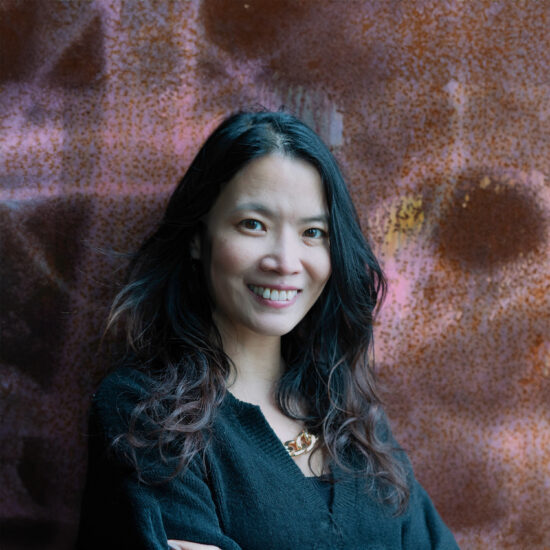
Prof. Dr. Tammy Lai-Ming Ho
Tammy Lai-Ming Ho is a Hong Kong-born scholar, poet, translator, and editor. She is the editor-in-chief of Cha: An Asian Literary Journal, a significant platform for the study and amplification of Asian voices, and co-editor of Hong Kong Studies, the only peer-reviewed journal focused on Hong Kong. She also serves as English Editor of Voice & Verse Poetry Magazine and Translation Editor of The Shanghai Literary Review. A former tenured Associate Professor at Hong Kong Baptist University, her academic work includes the monograph Neo-Victorian Cannibalism (2019) and articles on Hong Kong literature and culture. Tammy has co-edited anthologies such as Desde Hong Kong: Poets in Conversation with Octavio Paz (2014), Twin Cities: An Anthology of Twin Cinema from Singapore and Hong Kong (2017), and Hong Kong 20/20: Reflections on a Borrowed Place (2017). Her poetry collections include Hula Hooping (2015), which won the Young Artist Award in Literary Arts, Too Too Too Too (2018), and If I Do Not Reply (2024). In 2023, she was writer-in-residence at the International Writing Program at the University of Iowa. For her updated biography, visit tammyholaiming.com.