
When I began my work at KHK CURE, I was inclined to think of reparation as something rather positive: writers, painters, musicians using art not only to alleviate their own pain and the pain of others, but to restore something: a forgotten or suppressed memory, human dignity, the possibility of a shared future. Of course, such practices do not always succeed. Yet the impossibility of full repair does not make reparative attempts entirely vain: if a song cannot bring back the dead, it may still have a therapeutic effect on the mourning singer, as well as on those gathered to listen.
In this sense, reparative gestures appeared to me as a form of weak power, or as the power of the weak: fragile, partial, and imperfect ways of continuing to live in the aftermath of violence, oppression, or traumatic historical events.
Recently, however, my perspective changed rather abruptly. In the French podcast Lundisoir, first broadcast in January 2026, the philosopher Michel Feher analyzes contemporary authoritarian regimes, and in particular American politics. Feher suggests that the MAGA movement represents a specific form of imperialism, very different from the colonial imperialism of the last centuries. Rather than projecting the arrogance of a “civilizing mission” onto the world, contemporary authoritarian regimes are based instead on an imperialism of losers:
Trump, like most of the other members of the club – the club of potentates – belongs to the category of whining regional hegemons [hégémons régionaux geignards]. That is to say: we are no longer dealing with the arrogance and grandeur of those who claimed a civilizing mission, who took up the white man’s burden and sought to spread freedom across the world. That is no longer the register. The register is now: things have been stolen from us. We were stabbed in the back, we were exploited by others – but now it’s over! We are taking things back, we are restoring justice. Everything that was unfair will now be repaired. And we find this among all the others as well: with Putin, with Erdoğan, with Xi Jinping, with Modi. […] At the affective level, that is clearly what is going on.1
Feher explicitly mobilizes the vocabulary of “reparation” to describe the affective politics of contemporary authoritarian leaders: their political success rests on a demagogy of reparation – an orchestrated politics of grievance and promised restoration. Their discourse follows a familiar pattern: we, as a nation, have been wronged; I will be the one who will repair it. MAGA could indeed be paraphrased as MAWA, “Make America Whole Again”. Trump, Putin, Xi Jinping, Modi and Netanyahou stage themselves as victims, and their promise is that of restoration – of returning the nation or the people to a lost integrity, a mythical past in which justice supposedly prevailed.
In this light, the work of Didier Fassin and Richard Rechtman appears even more prescient than it first seemed to me. When they argue, in The Empire of Trauma (2009), that trauma and victimhood have become the fundamental moral categories of our time – and that this development may have troubling consequences – they perhaps underestimated the extent of the transformation. The language of trauma has not only reshaped humanitarian discourse and social policy; it has also entered the heart of contemporary mass politics. Trauma has become a political resource, a powerful instrument for mobilizing resentment and governing populations. This is what I would call the dark side of reparation.
A related reflection came to me while watching Raoul Peck’s 2025 documentary on Orwell: 2+2=5. The film is, on one level, an intellectual biography, tracing George Orwell’s formation from his years in the Indian Imperial Police in Burma through the Spanish Civil War and the composition of Nineteen Eighty-Four (1949). Drawing on Orwell’s diaries, letters, and essays, Peck interweaves readings from the writer’s texts with excerpts from cinematic adaptations of the novel and with contemporary images of rising authoritarianism across the world. The montage suggests that our present moment increasingly resembles the dystopian landscapes Orwell imagined.
Yet the film ends on a cautious note of hope. Through Orwell’s words, it returns to one of the central convictions of Nineteen Eighty-Four: that if hope exists, it lies with the common people – the ordinary masses whom the Party can manipulate but never fully own. It is what Orwell calls the “native decency of the common man” that remains, in the end, the only force capable of resisting the ruthlessness of the powerful.
This conclusion of the film feels strangely naïve. The “common man” does not exist as such, as a stable moral essence outside of history, discourse, and representation. What we call “the people” is always already constituted by the narratives, discourses, media, images, and political interpellations that give it shape, including, crucially, the discourse of trauma and reparation. Was it not precisely a desire for reparation – the feeling of having been wronged, humiliated, dispossessed – that drove the “common men” who stormed the United States’ Capitol in January 2021?
A non-fascist future cannot rest on a presumed moral decency of the people; it must concern itself instead with the ways collective affects are framed, cultivated, and mobilized. The same desire for reparation can lead either toward solidarity and care, and the patient reconstruction of what was damaged, or toward resentment, vengeance, and the seductions of authoritarian power. What path it takes depends not on the inherent goodness of ordinary people, but on the political and cultural work through which suffering is named, responsibility assigned, and imaginable forms of redress constructed. Perhaps the decisive political struggle concerns precisely this: who gets to define what counts as a wound, and what it would mean to repair it.
1. Michel Feher, “Trump ou les habits neufs de l’impérialisme”, 19 janvier 2026, https://lundi.am/Trump-ou-les-habits-neufs-de-l-imperialisme The text above is my translation of the following lines: « Trump, comme d’ailleurs la plupart des autres membres du club, le club des potentats, fait partie des hégémons régionaux geignards. C’est-à-dire qu’on n’est pas dans l’arrogance, on n’est pas dans la morgue et la superbe des tenants de la mission civilisatrice, des tenants du fardeau de l’homme blanc, (…) qui va répandre la liberté sur le monde. On n’en est pas là. On est sur un mode : on nous a piqué des trucs. On a été poignardé dans le dos, on a été exploité par les autres, mais là c’est fini ! On reprend les choses, on rétablit la justice. Tout ce qui a étéunfair va être réparé maintenant. Et ça, on le retrouve chez les autres aussi : on le retrouve chez Poutine, on le retrouve chez Erdogan, on le retrouve chez Xi Jin Ping, on le retrouve chez Modi. (…) Au niveau affectif, c’est clairement ça. »
Julien Jeusette. “The dark side of reparation”. The Reparation Blog, 25 May 2026. https://cure.uni-saarland.de/en/media-library/blog/the-dark-side-of-reparation/.
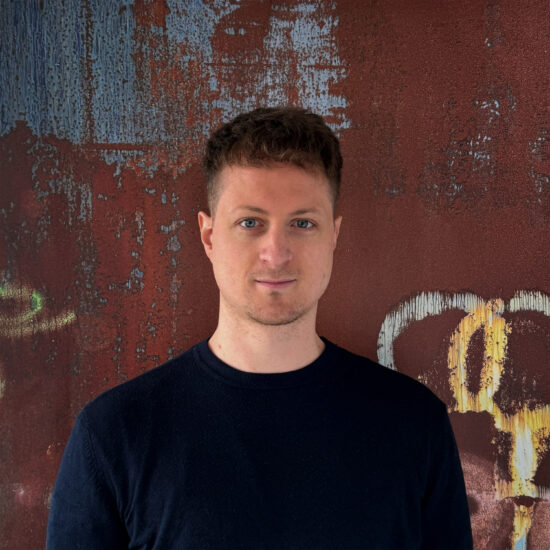
Dr. Julien Jeusette
Julien Jeusette is research programme director at the Käte Hamburger Centre CURE. After completing a joint PhD in modern literature at the University of Paris Cité and the University of Luxembourg (2017), he completed a four-year postdoc at the University of Milan, followed by a two-year postdoc at the Luxembourg School of Religion & Society (affiliated with the University of Bonn). While holding this postdoc, he also served as a seminar director at the International Collège International de Philosophie in Paris (2022–2023) and was a visiting lecturer at the University of Liège (2022–2024). His research is situated at the intersection of literary studies, philosophy, and critical theory. He is currently finishing a book, Claustropolis. Le rêve d’un monde sans dehors (under contract with La fabrique, to be published in early 2027), and a translation from German into French, Land und Streit by Judith Kasper (under contract with Verdier, to be published in early 2027).