
Or: What Is a “Centre for Cultural Practices of Reparation”?
What is a Centre for Cultural Practices of Reparation? Beyond a question of definition, for those of us collaborating in Saarbrücken this also became a question of translation as we began our work in April 2024. We asked ourselves: What should we be called in English and in French? How should we translate Käte Hamburger Kolleg für kulturelle Praktiken der Reparation? Returning to this question, this glossary entry asks what translating our name says about the work we do and – picking up the same questions addressed by my colleagues Albrecht Buschmann and Slaven Waelti in German and French – what translation might mean today for practices of reparation and repair.
In one sense, our name in English was institutionally set: our peer institutions, funded through the same programme of the German federal government, are all called Käte Hamburger Centres of one kind or another. But in our case, the term “centre” is especially charged, because the question of what constitutes a centre touches directly on cultural practices of reparation. First, it risks reinstating a centre-periphery divide, reproducing, for example, colonial injustices that caused many of the harms now prompting calls for reparation and repair. Shifting from Kolleg to centre also foregrounds the growing hegemony of English as a linguistic centre of discourse across so many fields, not least science and scholarship.1 And it raises the question of academic self-centredness: the epistemological pre-eminence that research institutions and practices often claim in producing, theorising, and adjudicating knowledge by their own formalised epistemic criteria. Calling ourselves a centre thus immediately posed the question of how our work relates to the communities and individuals for whom cultural practices of reparation matter most immediately.
This ethical stance became especially pointed in deciding what exactly would be attached to this centre in our name: Would we be a “centre for cultural practices of reparation”? Or a “research centre for cultural practices of reparation,” meaning a centre for the study of cultural practices of reparation? A Kolleg – our name in German – is clearly marked as an academic institution; the word signifies a body whose members are institutionally constituted and legitimised as discursive peers. But without this academic emphasis, a “centre” seems to promise more, perhaps suggesting that our primary work lies in politics or activism. Many of the centre’s scholars and artists are directly engaged in efforts toward reparation and repair, just as scholarship on practices of cultural reparation always entails ethical and political responsibility. Part of our mandate, moreover, is to engage with publics beyond academia. But we remain an academic centre; it would be misleading to claim that our work lies mainly in practices of cultural reparation. Calling ourselves a research centre for cultural reparation, by contrast, would have shifted the balance too far in the other direction – toward a position too abstract, too removed from the world. Ultimately, our choice was for the more directly worded, less restrictive “centre”, leaving space for the institution to be more than a site for study. So while the act of translating our name forced us to articulate what we do and who we do it for, the answer – in three languages – could at best capture the tensions inherent in the ethical stance of our position and practice.
Such semantic openness and incongruence are inherent to translation, which always exists between languages. Practices and theories of translation, especially over the past several decades, have accordingly foregrounded how translation can decentre meaning, language, and power. Attentive to the ways colonialism has wielded language as a weapon, and to the homogenising effects of global media and globalisation, writers and scholars have turned to translation as a site of resistance to monolingual national traditions and cultural hegemony.2 Others have argued that the decentring effects of translation are at work within cultures or societies, declaring translation to be a “key social practice” that fosters difference in mediating between semantic contexts, geographies and temporalities, and even boundaries between the non-human and human.3 As a practice that is always relational and situational, never complete or whole, translation offers ways of thinking that apply directly to the approach taken by many of our scholars and artists. Confronting harms that cannot be undone, their work explores what reparation can mean apart from restoring some kind of lost integrity. What matters is rather the cracks and fragments, the elements that cannot be reassembled or reconstituted – and what they tell us about the structures of power and discourse.
This perspective is vital: it cultivates cultural and linguistic difference and opens new avenues for critique and expression, for speaking and thinking otherwise in the face of discursive power. But for all its fragmentary openness, translation remains a double-edged sword. It grants access even as it overwrites its source. It offers transcultural and intercultural spaces beyond or between dominant discourses, while lessening the need to learn other languages and engage new cultural contexts. It also creates a structural imbalance, in which the agent of translation necessarily knows more than both the author of a communication and the target audience – otherwise, no translation would be necessary. And, one could argue, it is these dynamics of translation that are most relevant today for the question of reparation and repair, because they go to the heart of how translation is now increasingly taking place – and changing at breakneck pace – and that is through AI.
Today’s large language models have extraordinary real-world consequences for translation, making language accessible in ways we know only from science fiction. In my experience, the business of translation has radically shifted, with almost all commercial texts not containing sensitive information translated through post-editing, in which machine output is checked and rewritten by a human editor, and I cannot foresee a future in which this trend does not continue as these tools grow more powerful. Of course, the significance of AI goes far beyond its use for translation, just as translation is only a subset of what these systems are being used for.4 And it seems obvious that applications of AI centred on language use itself – such as writing, editing, or translating – will generate far less economic value or even knowledge than applying AI’s capacity for pattern recognition to other problems or questions. Nevertheless, what makes the technology so consequential is precisely that these capacities are based on, accessed through and manipulated by human language: language is both the input interface and operating medium. And it is precisely because of this imbalance, between language and its effects, that translation offers a powerful use case for thinking about large language models, with implications beyond its own practices, because it also compels us to ask where responsibility lies for speech.
When it comes to the business and ethics of authorship, publishers, academic institutions, and author organisations are now addressing issues of disclosure, copyright, and attribution. Some decry AI as an existential threat to thought and creativity; others see writing with AI as a radicalisation of the idea that language itself is a tool – a system of possibilities and constraints, of discursive affordances – that a speaker inherits but does not create. “Generative AI,” as one recent paper argues, “exposes the historical fragility of Romantic myths of the sovereign, self-transparent writer” – but it does so, the authors add, “without inaugurating a crisis of authorship itself.”5 Retracing how “computational and posthuman accounts decenter the sovereign subject while leaving intact the need for accountable agents”, it contends that the very notion of “AI authorship” is a category mistake, as “statistical systems cannot occupy positions of accountability, vulnerability, and justificatory dialogue.”6
Translators, in any case, always occupy a hybrid position that decentres authorship without questioning the category itself; they always inhabit a “third” position between author and meaning, between text and translation, constructed through the technologies of language and writing. AI radicalises this position: translators become cyborgs in a newly explicit sense of the term.7 One consequence is that the translator – as a single human agent – cannot be seen as the locus of discourse.8 Yet this has always been true. As a tool for translation, generative AI brings into sharp relief a fear that has haunted speech and writing for millennia: when it comes to thought, bright lines between technology and human creativity are hard to draw. Or more radically: drawing them makes little sense, since human creativity is always expressed, practised, and embedded in and through technologies, including techniques du corps and discursive technologies, with the consequence that technologies are practices of “world-building” or “world-making” whose material effects must be interrogated to understand how they construct meaning and exercise power.9
The ethical question that translation poses in this context is not: Did I – as author or translator – produce these words? But: Do I take responsibility for what they say, for using them. The question is: How does one take responsibility for speech when words are not fully my own? This means asking what language does, and with what effects – beginning with the idea that language use implicates a search for a speaker, or that it refers to the world rather than internally to itself as a system of signs. These issues arise through the intentional use of language, but they do not exhaust what language is. Leif Weatherby has recently argued that large language models, as a form of AI, do not simulate cognition but in fact create culture – that they generate meaning from the semiotic systems on which they have been trained.10 For this reason, they also show why language does not fully coincide with cognition or subjectivity, by demonstrating that language can generate meaning without human understanding, intention, or consciousness. Conversely, they offer insight into our semiotic surrounds and the media in which they are constructed. In this sense, he concludes, LLMs are essentially “literary” – and that the challenges they pose call for well-established tools and approaches for reading texts and cultural artefacts, starting with literary criticism but extending to structuralist approaches to language that have fallen out of favour over the last decades.
Of course, these are also the tools of a translator, who is not just a writer of words but a reader of the text, working between semiotic systems that extend beyond the written page into the cultural worlds in which it claims meaning. Taking responsibility for speech in this situation requires articulating practices and norms for what it means to use language with care, to be attentive to intent and effects and context, to address issues of power and inequality – not within the text itself, as an ethics of fidelity to the source or the author, but in the world, through an awareness of what language does and how it operates. Most importantly, such questions cannot be posed – or answered – on an individual level. They are necessarily pluralistic and collective; they must consider multiple contexts, languages, speakers, and readers. Translation in this sense is marginal, but in a powerful way: it is systemic, structural, and intersubjective, a decentring of agency as communicative practice. This is also what it means to a Centre, Centre, and Kolleg for Cultural Practices of Reparation.
Michael Thomas Taylor
1. Though English is of course neither monolithic or even monolingual. See, for instance, Bertus van Rooy, World Englishes: The Local Lives of a Global Language (Edinburgh University Press, 2024).
2. Chris Song’s contribution to the centre’s first yearbook highlights the – independent – emergence of the term “reparative translation” in recent work by Emily Apter and Paul F. Bandia; see Chris Song, “Toward Sinophone Translation: Contextualizing Reparative Translation Through Sinophone Studies and Double Decolonization”, in Reparation and Irreparability: Theoretical Approaches, ed. Julien Jeusette, Hendrik Rungelrath, Laurens Schlicht, and Hannah Steurer (De Gruyter, 2026), 151–169, https://doi.org/10.1515/9783112234266-010. Song points to Emily Apter, “Afterword: Towards a Theory of Reparative Translation”, in The Work of World Literature, ed. Francesco Giusti and Benjamin Lewis Robinson (ICI Berlin Press, 2021), 209–228, and Paul F. Bandia, “Reparative Translation, Decoloniality, Metacoloniality”, in Translation and Decolonization: Interdisciplinary Approaches, ed. Claire Chambers and Ipek Demir (Routledge, 2024). See also Souleymane Bachir Diagne, De langue à langue: L’hospitalité de la traduction (Albin Michel, 2022).
3. Doris Bachmann-Medick, Übersetzung neu denken: Eine gesellschaftliche Perspektive (Campus Verlag, 2026).
4. One study, widely covered in English-language media, that examined queries to ChatGPT between May 2024 and June 2025 included translation as a subset of “writing”, identifying 4.5 percent of queries as translation-related. See Aaron Chatterji et al., “How People Use ChatGPT”, NBER Working Paper no. 34255 (National Bureau of Economic Research, September 2025), http://www.nber.org/papers/w34255, fig. 9, p. 16. If the importance of translation for AI is marginal, the reverse is not true. A Washington Post article on research from GovAI and the Brooking Institution identity “translator” as one of the top three professions most exposed to AI; “See Which Jobs Are Most Threatened by AI and Who May Be Able to Adapt”, Washington Post, 16 March 2026, https://wapo.st/4uvCpcY. “Threatened” here must mean: exposed to disruption, with unpredictable consequences, not guaranteed obsolescence.
5. Michael Uebel and Bilal Hamamra, “Authorship After Generative AI: Distributed Creativity and Relational Responsibility”, Philosophy & Technology 39, no. 152 (2026), https://doi.org/10.1007/s13347-026-01170-w.
6. Uebel and Hamamra, “Authorship After Generative AI”, 3 and 1.
7. This idea can be traced, in the sense I am using here, to the work of Andy Clark, most importantly Natural-Born Cyborgs: Minds, Technologies, and the Future of Human Intelligence (Oxford University Press, 2003). Since then, and with a new urgency since the emergence of today’s LLMs, a body of thought has developed around the idea that cognition or the mind extends into, or is bound up with, the world through tools, language, writing, and the senses. See, for instance, Richard Menary, ed., The Extended Mind (Cambridge, MA: MIT Press, 2010), or Clark’s more recent article, focused on AI, “Extending Minds with Generative AI”, Nature Communications 16, no. 1 (2025): 4627, https://doi.org/10.1038/s41467-025-59906-9.
8. Translators are still agents – even agents of history! For an engaging and highly readable account, see Anna Aslanyan, Dancing on Ropes: Translators and the Balance of History (Profile Books, 2022).
9. I take this understanding of technology from the introduction to the Cambridge History of Technology, ed. Dagmar Schäfer, Francesca Bray, Matteo Valleriani, Shadreck Chirikure, and Tiago Saraiva, 3 vols. (Cambridge University Press, forthcoming).
10. Leif Weatherby, Language Machines: Cultural AI and the End of Remainder Humanism (University of Minneapolis Press, 2026). This also entails giving up the “remainder humanism” he names in his title – the ever-shifting attempt to stake out one last refuge of what humans can do, and machines cannot.
Taylor, Michael Thomas. “Translation”. Repair: A Glossary of Cultural Practices of Reparation, 11 September 2026. https://cure.uni-saarland.de/en/media-library/glossary/translation/.
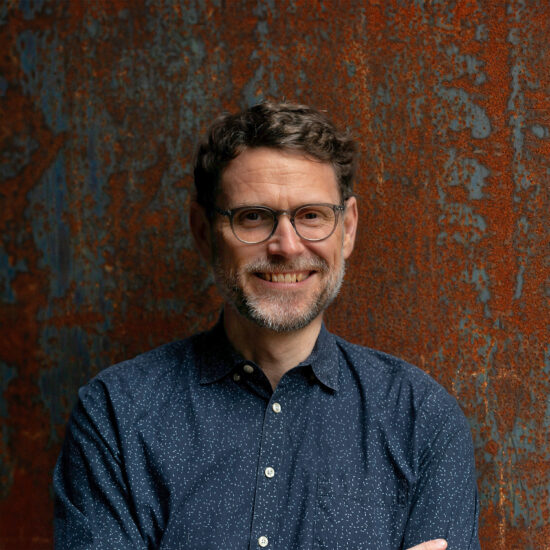
Dr. Michael Thomas Taylor
Michael Thomas Taylor (PhD 2007, Princeton University) works as a Berlin-based German-Canadian-American editor and translator (German to English). In addition to his freelance work and role at the KHK, other recent positions have included research scholar at the Max Planck Institute for the History of Science (2023–2024). Before moving to Berlin in 2017, he held positions as assistant professor of German (with tenure) at the University of Calgary in Alberta and associate professor of German and humanities at Reed College in Portland, Oregon. Specializing in gender studies, he has published award-winning scholarship; curated exhibitions in queer history and transgender history; taught as guest faculty at Bard College Berlin; and worked in grant writing and public affairs for universities and US non-profits.