This project focuses on the sonic and embodied hierarchies within Odissi’s classical canon, specifically through an analysis of Sharmila Biswas’s choreography Dhuli Khel (1990). Dhuli Khel (literally: “The Play of the Dust”) integrates percussion repertoires of caste-oppressed communities of Odisha. In Indian classical dance, percussion is central to both pedagogy and performance. The percussion instrument named mardala (used in Indian classical dance forms), institutionally categorised as a “classical” instrument, is traditionally associated with upper-caste Brahmin musicians and temple rituals. In contrast, Dhuli Khel incorporates instruments such as the khol, nishan, ganda baja, and dom baja historically played by caste-oppressed Ganda and Ghasiyan groups, as well as these percussionists who dance while playing the instruments. Their inclusion within a classical dance system such as Odissi destabilises the aesthetic and social hierarchies that underpin the category of “classical”. This intervention also exposes how the notion of the “classical” is anchored in Brahminical (uppermost caste) ideologies of purity, which produce distinctions between Brahmin bodies deemed “pure” and non-Brahmin, especially Dalit and other caste-oppressed bodies marked as “impure”, and often criminalised on the basis of caste identity and occupation. By focusing on these sonic interrelations, this research interrogates how Odissi choreographies simultaneously mobilise, highlight, or silence subaltern bodies and artistic labour, and how these negotiations enact intercultural coexistence within India’s stratified cultural landscape.
DR. SINJINI CHATTERJEE
CURRICULUM VITAE
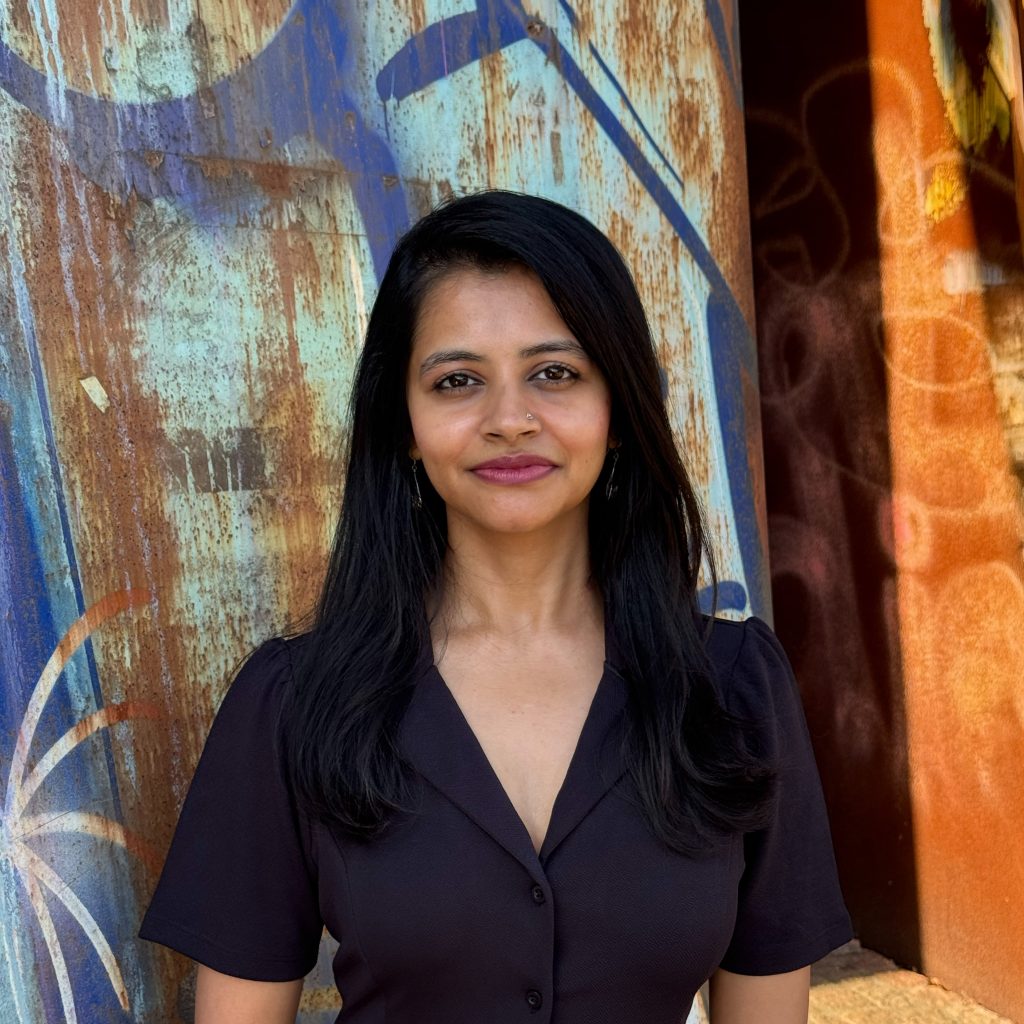
Sinjini Chatterjee is a critical dance and performance studies scholar. She has been a postdoctoral scholar in the Department of Dance Studies at The Ohio State University and holds a PhD in critical dance studies from the University of California, Riverside. Her research traces the interdependence between Odissi dance (a South Asian “classical” dance style from the state of Odisha in India) and other non-classical folk, tribal, and ritual performance practices of Odisha. Her work has been funded by the New York Public Library Fellowship and a research scholarship at the University of Music and Dance in Cologne, as well as by the International Federation for Theatre Research (IFTR), the Association of Theatre in Higher Education (ATHE), the Coca Cola Foundation, and the Kellogg Foundation. Chatterjee has trained for fifteen years in Odissi dance under the guidance of Smt. Aloka Kanungo and has performed widely in India and the United Kingdom.