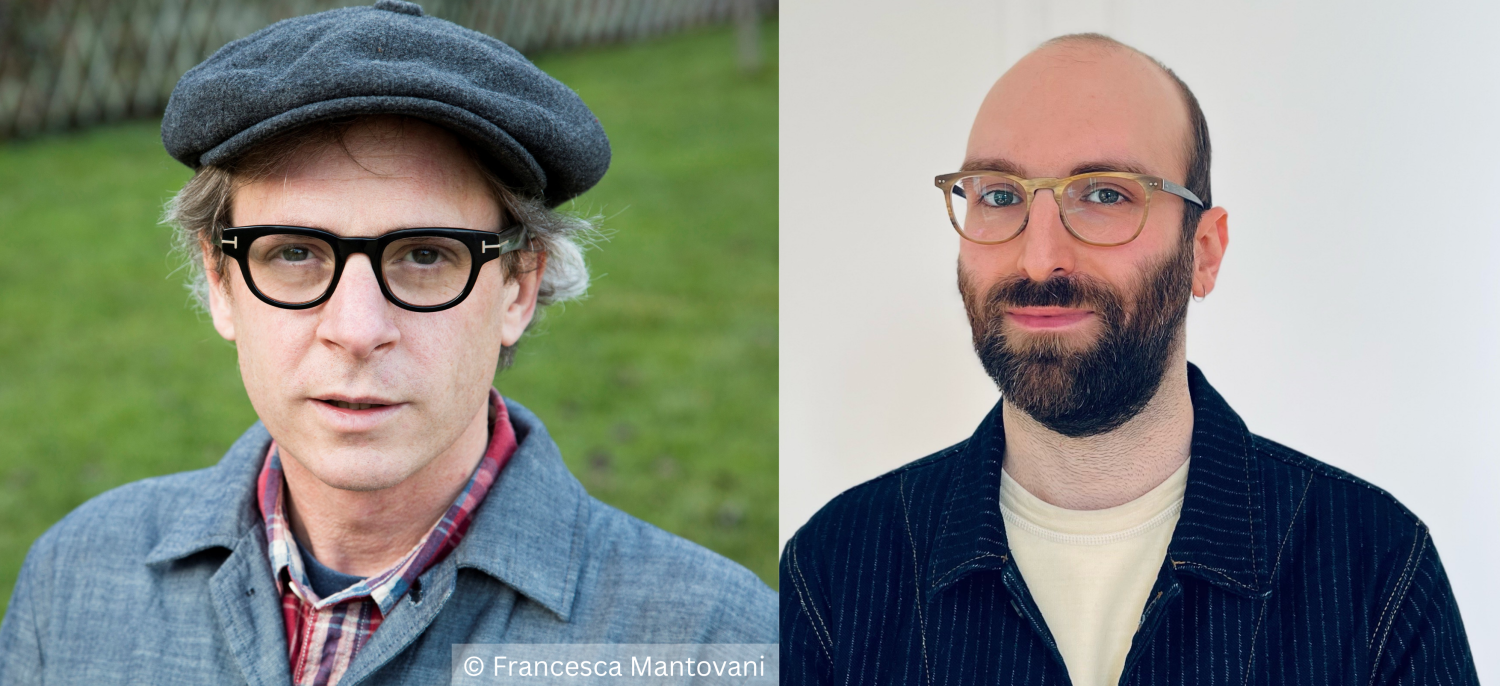
AN EVENING OF DISCUSSION WITH CAMILLE DE TOLEDO AND KIANUSH RUF
WHEN
WHERE
Jules Verne, Paul-Marien-Straße 11, 66111 Saarbrücken
LANGUAGE
GERMAN & ENGLISH
PROGRAMME
For more than half a century, people have been considering the idea of granting legal personhood to nature, or to individual elements of it – such as rivers, lakes, glaciers, and forests. In recent decades, concrete examples from around the world have shown how this idea can be put into practice.
Writer and artist Camille de Toledo is actively involved in this movement for the rights of nature. Through the projects “The Parliament of the Loire” and “The International of Rivers” (see the books Le fleuve qui voulait écrire, Flammarion, 2024, and L’Internationale des rivières, Verdier, 2026), he has been campaigning in France and Germany for rivers to be recognised as legal persons. Such recognition would make it possible to represent their interests in court and to provide a new, legal basis for challenging the exploitation and destruction of rivers and their ecosystems on a new legal basis.
Kianush Ruf, research associate at the Chair of Romance Literatures and Comparative Literary and Cultural Studies, is a distinguished expert on Camille de Toledo’s work. He has translated de Toledo’s texts into German for Rhinozeros. Europa im Übergang and the Saarland State Theatre, and he works extensively on the theoretical debates surrounding the Anthropocene in France and Germany. As Camille de Toledo’s interlocutor, he brings a rigorous perspective on questions of social and ecological justice in the Anthropocene, particularly in relation to the history of colonial exploitation and oppression.
The evening at the event space Jules Verne offers an opportunity to take a short journey through the history of the rights of nature and to discuss landmark cases – including the Whanganui River in New Zealand and the Río Atrato in Colombia. Camille de Toledo and Kianush Ruf invite the audience to reflect on key questions and the challenges they entail – including whether, and how, the “voices” of natural entities can be adequately translated and embodied.
The event is organised by the Käte Hamburger Centre CURE in cooperation with the Stiftung Demokratie Saarland. Admission is free and forms part of the project “Rivers Beyond Borders – The Saar as Worker”. Admission is free.
IN COOPERATION WITH:
Bourges 2028, Bureau du Livre – Institut français Deutschland, Cluster für Europaforschung (CEUS), Goethe Institut Nancy, Die Weltveränderer, HEAR – Haute école des arts du Rhin im Rahmen des Festival du Rhin, des fleuves et des rivières, Haus der Nachhaltigkeit Saarbrücken, L’Institut d’études avancées de Nantes, Institut d’Études Françaises, Kulturgut Ost und Sektor Heimat, NABU, Stiftung Demokratie Saarland, UNESCO Weltkulturerbe Völklinger Hütte, Universität des Saarlandes